

Designing Goals That Fit This Season of Life
Why Goal Setting Feels Different in Retirement
In your working years, goals often came preloaded: meet deadlines, get promoted, support your family. But in retirement, the structure vanishes—and with it, the pressure to do. That can be liberating… or disorienting.
Many retirees find themselves asking:
– What do I want to do now?
– What matters most to me, truly?
– How can I stay purposeful without being overwhelmed?
This stage of life calls for a different kind of goal setting. Not driven by external pressures, but guided by your values, energy, and aspirations. This is where intentional, lifestyle-aligned goal design becomes so important.
Step 1: Rethink What a “Goal” Looks Like
Not every goal needs to be big or bold. In retirement, goals can be gentle, life-affirming, and seasonally adaptable.
Try asking:
– What would feel good to work toward this month?
– What small project would bring joy or meaning to my day?
– What area of my life could benefit from a little more attention?
Examples might include:
– Cook three new plant-based meals this month
– Walk 30 minutes, four days a week
– Start a memory book for your grandchildren
– Learn how to use a new app or tech tool
– Have one “social coffee” each week
The key? Make them specific, realistic, and personally meaningful.
Step 2: Connect Your Goals to Your Values
Research shows we’re more likely to stick with goals when they connect to our internal values—not just surface-level desires.
Use this simple question to test alignment:
– Does this goal reflect what matters most to me right now?
For example:
– “Walking daily” becomes about health freedom
– “Volunteering once a week” aligns with giving back
– “Learning a language” reflects a love of travel and curiosity
When your goals are grounded in what you care about, your motivation lasts longer—and the effort feels more satisfying.
Step 3: Keep It Manageable and Modular
One of the joys of retirement is flexibility. So your goals should be modular, too.
Instead of:
– “Write a book”
Try:
– “Outline 5 chapter ideas this month”
Instead of:
– “Redo the whole garden”
Try:
– “Repot 3 plants this week”
This chunking-down method helps you move forward without feeling stuck or overwhelmed. Progress becomes visible, and progress fuels momentum.
Step 4: Use Gentle Structure to Track and Reflect
Without work deadlines or accountability meetings, it helps to create your own light structure. Not to be rigid—but to stay connected to what you’re working toward.
Try:
– Keeping a small “Goal + Habit” notebook
– Scheduling a weekly 15-minute check-in with yourself
– Using a simple tracker for movement, reading, connection, or creativity
– Reflecting monthly: What felt meaningful? What can I refine?
This reflective loop helps you stay adaptable. If a goal no longer fits, it’s okay to adjust.
Step 5: Make Room for Joy and Spontaneity
Not every goal needs to be utilitarian. Some of your most fulfilling retirement goals might be:
– “Make space for wonder”
– “Dance once a week”
– “Say yes to spontaneous invitations”
These are not lesser goals. In fact, they may be the most life-giving ones of all. In retirement, it’s not about squeezing in joy—it’s about letting joy lead.
Final Thought: Let This Season Shape You
Goal setting in retirement isn’t about productivity. It’s about presence. It’s about choosing, every week, to invest your time and energy in ways that reflect your values and bring you closer to the life you want to live.
This season is yours to shape. The goals are just your way of making the shaping intentional.
Continue the Journey
📘 9 Habits of Happy Retirees — Your guide to building a meaningful, purpose-filled retirement
📝 9 Habits Workbook — Practical prompts, goal templates, and progress trackers
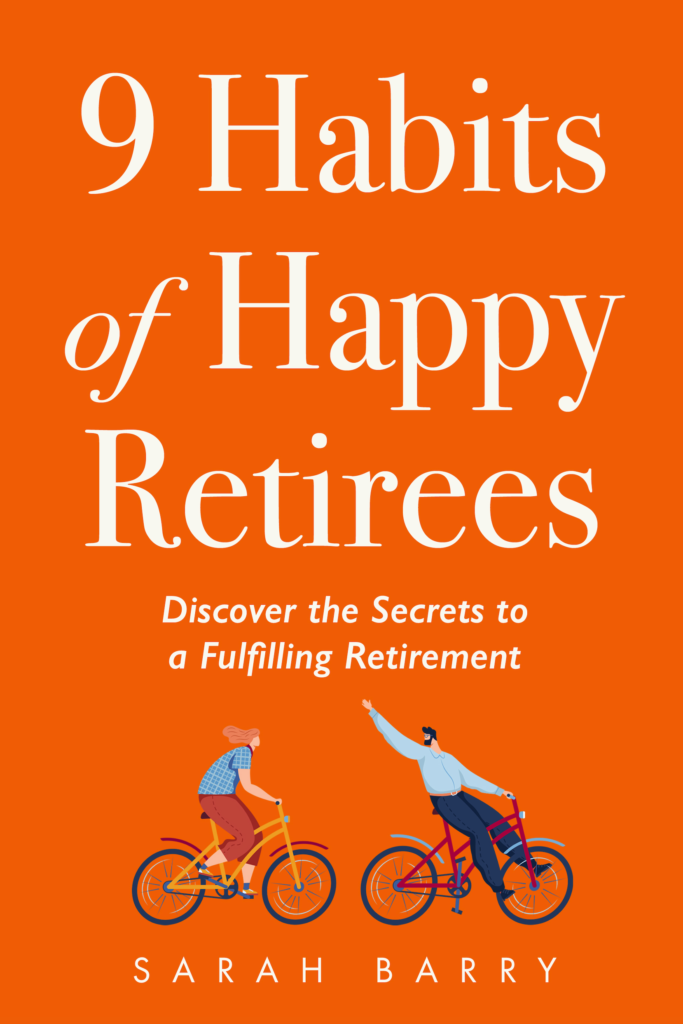
Retirement Re-defined
“9 Habits of Happy Retirees” is your guidebook to crafting a retirement lifestyle that goes beyond financial security, focusing on the habits that lead to true happiness and contentment in your golden years.
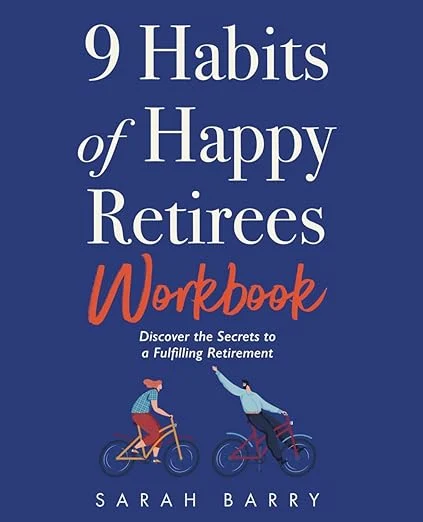
The Essential Workbook
This workbook is designed to complement the book’s theoretical foundation, it offers a hands-on approach to improving your mental, emotional, and social well-being in retirement.
🌐 Visit www.sarahbarry.com or email hello@sarahbarry.com to explore coaching and resources tailored to your next chapter