
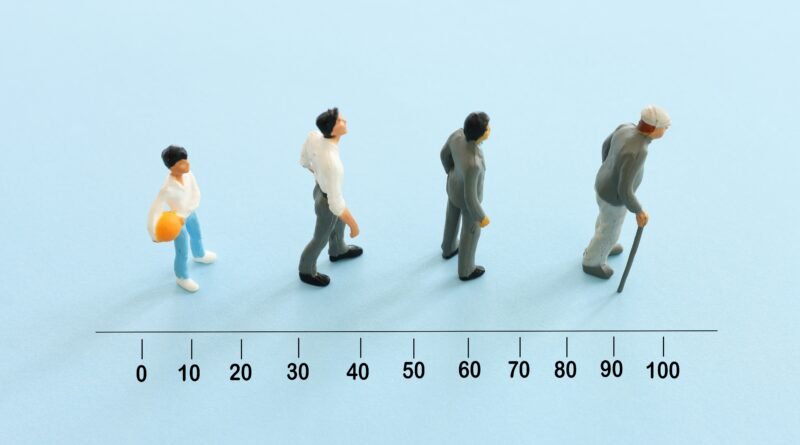
Retirement Was Designed for Shorter Lives
Retirement is often described as a finish line.
A reward. A rest. A well-earned pause after decades of effort.
But there’s a quiet truth sitting underneath most retirement conversations:
The retirement model we inherited was designed for a world where people didn’t live this long.
Not “didn’t live this well.”
Simply… didn’t live this long.
And when you look at retirement through that lens, much of today’s confusion begins to make sense.
The retirement system wasn’t built for 25–30 years
The modern idea of a state-backed retirement didn’t begin as a lifestyle aspiration. It began as social policy: a way to reduce poverty in old age, create stability, and offer a basic safety net.
Germany is often credited with introducing one of the first national old-age pension systems in the late 1800s. In that original model, the pension age was set at 70.
The United Kingdom introduced its first state pension through the Old Age Pensions Act 1908, also with eligibility at 70.
In the United States, the Social Security Act was signed into law in 1935 during the Great Depression as part of a broader effort to protect economic security in later life.
Retirement systems did not begin as a plan for extended freedom and reinvention.
They began as protection against vulnerability at the end of life.
And at the time they were introduced, retirement was not expected to last decades.
When retirement ages were set, life expectancy was very different
This is where the gap opens.
In the U.S. in the 1930s, life expectancy at birth was roughly 58 for men and 62 for women, while the “normal” retirement age was 65. Even allowing for the way infant mortality skews averages, remaining life expectancy at 65 was estimated at around 12 years for men and 14 years for women.
Today, the landscape looks very different.
Across countries tracked by the Organisation for Economic Co-operation and Development, life expectancy at age 65 has increased significantly over recent decades.
That is not a minor shift.
It is structural.
The post-career phase of life has expanded — quietly, steadily — until it can now be as long as the career itself.
And yet many people still step into retirement carrying a mental model built for a much shorter chapter.
The modern retirement problem isn’t only financial
When people struggle in retirement, it is often framed as a money issue.
And sometimes it is.
But many financially stable retirees still feel uneasy. Restless. Flat. Uncertain. Quietly adrift.
Not because they are doing retirement “wrong.”
But because they are trying to live inside a design that no longer matches reality.
A retirement that lasts five to ten years can be filled with rest, travel, hobbies, grandchildren, and downtime. It is relatively easy to imagine.
A retirement that lasts twenty-five or thirty years requires something else:
- a relationship with time that evolves
- a sense of identity that can survive without a job title
- a way to create structure without someone else providing it
- a longer view of health, energy, friendships, contribution, and meaning
In a long retirement, you do not simply “stop working.”
You enter an entirely new life phase that needs its own architecture.
What happens when time expands — but structure doesn’t
Here is the part that rarely gets said clearly:
Time is not automatically a gift. Time is a responsibility.
When you move from a structured life to an unstructured one, it can feel like relief at first.
Then freedom.
Then — for many people — an unexpected weight.
Because “open time” sounds romantic. But human beings tend to do better when they have:
- rhythm
- connection
- purpose
- small commitments
- a reason to engage
Without those, time becomes blank. And blank time has a way of turning into drift.
Drift rarely looks dramatic. It is usually quiet:
- days blur together
- motivation softens
- confidence dips
- social life narrows
- health routines loosen
- and a person begins to ask, privately: Is this it?
Again — not because they failed.
But because retirement, as originally designed, was never meant to hold an entire second adulthood.
Longevity changes the emotional job of retirement
We are used to thinking of retirement as a single transition.
Work ends. Retirement begins.
But if you may live into your late 80s or 90s, retirement is not one chapter.
It is many.
There may be:
- an early phase of energy and freedom
- a middle phase of redefining identity
- a later phase of adapting to physical changes
- a phase of caregiving
- a phase of simplifying
- a phase of reflection and legacy
These phases overlap. They surprise you. They shift with health, relationships, and circumstance.
Retirement becomes less a destination and more a long arc.
Which means the emotional question changes too.
It is no longer:
“How do I stop?”
It becomes:
“How do I live well over a long horizon — without losing myself?”
We planned for lifespan.
We didn’t plan for identity-span.
Longevity adds years.
But it also adds a psychological demand: reinvention.
Not dramatic reinvention.
More often, the quieter version:
- creating new roles that matter
- building relationships beyond work
- redefining competence
- discovering what you value when achievement is no longer central
- contributing without burning out
Many people were prepared to be productive.
Prepared to be responsible.
Prepared to be needed.
They were not prepared to answer:
“Who am I when I’m no longer performing my role?”
And in a long life, that question does not go away.
You have to live inside it long enough to let something new emerge.
A new model: designing decades, not “retirement”
If retirement was designed for shorter lives, then trying to “do retirement” the traditional way can feel like living in a house with too few rooms.
So perhaps the shift is this:
Do not design “retirement.”
Design decades.
Instead of one big plan, think in phases:
- What do I want the next 3–5 years to feel like?
- What structure supports that?
- What relationships do I want to deepen?
- What habits protect my energy?
- What does contribution look like now?
- What do I want to learn, make, explore, or give?
This is not about filling time.
It is about giving life shape.
Because in a long retirement, meaning does not arrive automatically.
Meaning is built — slowly — through rhythm, connection, intention, and self-trust.
The real shift
Retirement was originally designed as an end-of-life safety net.
Today, for many, it is something else entirely.
It is not the final chapter.
It is a long new phase of life.
And long phases require intention.
They require evolving structure.
They require identity beyond a job title.
And they require a relationship with time that feels purposeful, not passive.
We prepared financially for longer lives.
Now we need to prepare emotionally and structurally for them.
Because a long life deserves more than an outdated blueprint.
Retirement Re-Defined
If you’re rethinking what retirement means in a longer life, these resources expand on the ideas in this article:
📘 9 Habits of Happy Retirees – Including habits that support connection, contribution, and wellbeing.
📗 The 9 Habits Workbook – Structured prompts to help you strengthen your social and emotional foundations.
📙 The Golden Gap Year – A thoughtful exploration of how to navigate the transition into retirement with clarity.
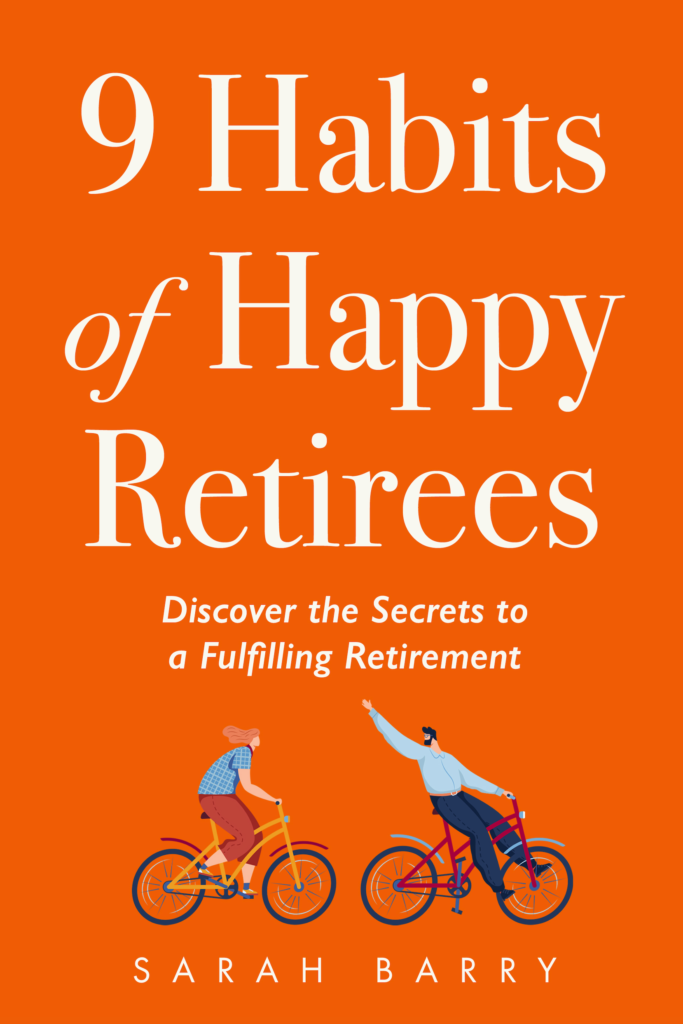
Retirement Re-defined
“9 Habits of Happy Retirees” is your guidebook to crafting a retirement lifestyle that goes beyond financial security, focusing on the habits that lead to true happiness and contentment in your golden years.
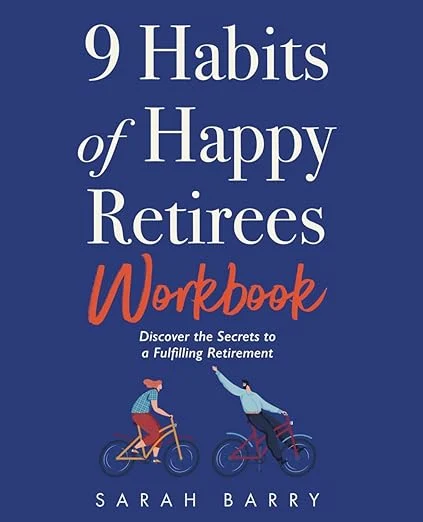
The Essential Workbook
This workbook is designed to complement the book’s theoretical foundation, it offers a hands-on approach to improving your mental, emotional, and social well-being in retirement.
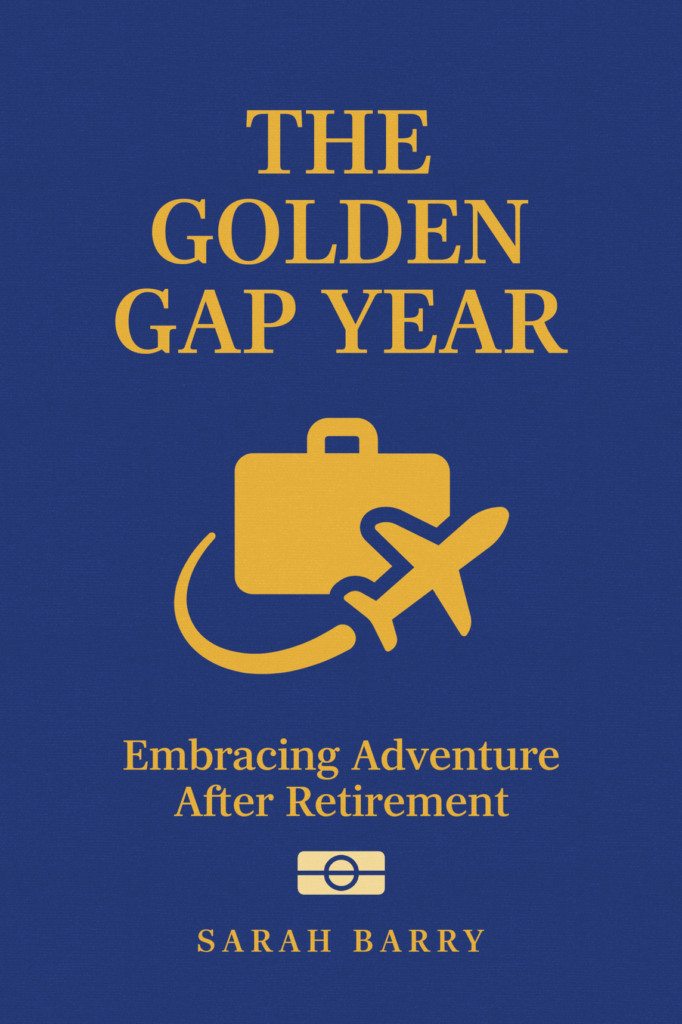
Adventure Re-imagined
A fresh take on post-retirement adventure. This inspiring new book invites you to reimagine your next chapter with purpose, joy, and the freedom to explore what truly lights you up. Your journey is just beginning.
Retirement may have changed. The opportunity within it has expanded too.
🌐 Visit www.sarahbarry.com or email hello@sarahbarry.com for coaching and tools to support your next chapter.