
The Social Architecture of a Long Life
We are learning how to live longer.
What we are less practiced at is learning how to live longer together.
Much of the conversation about longevity focuses on health, finances, and personal fulfilment. We are encouraged to think about how to stay active, how to protect our energy, how to design meaningful work or retirement. All of that matters.
But long lives are not lived in isolation.
They are lived in networks.
And when life stretches across decades beyond midlife, the structure of those networks changes.
Longevity is not only a personal design challenge. It is a social one.
Relationships Do Not Stay Static
In earlier generations, life stages were compressed. People often worked in the same place for long stretches, lived near extended family, and retired into shorter final chapters. Social circles, while not perfect, were relatively stable.
Now, mobility is higher. Careers shift. Families are geographically dispersed. Retirement may last twenty or thirty years. Children move cities or countries. Friend groups thin, relocate, or fragment.
At the same time, the span of adult relationships has lengthened. Marriages may stretch across forty or fifty years. Friendships may last decades. Siblings age together over a much longer horizon.
That extended time changes the texture of connection.
A relationship at year ten is not the same as at year thirty. The context changes. Roles change. Energy changes. What you expect from each other changes.
Longevity amplifies these shifts.
The Quiet Risk of Social Contraction
When work falls away, one of the invisible losses is casual contact.
Colleagues. Clients. Commuters. The familiar faces that punctuate a week.
Even if those relationships were not intimate, they created social density. They provided conversation, friction, humor, disagreement, and collaboration. They reminded you that you were part of a larger system.
Retirement removes that density.
At first, the quiet can feel welcome. Fewer interruptions. Fewer obligations. More control over the day.
But without intention, social circles can narrow gradually.
You see the same few people. You cancel occasionally. You decide not to join something because it feels like effort. Invitations become less frequent. You assume there will always be another chance.
Over time, the radius of connection shrinks.
This is rarely deliberate. It is a by-product of comfort and reduced external structure.
And across twenty years, small reductions accumulate.
Longevity increases the importance of social architecture because the consequences of contraction play out over a longer horizon.
Partnership Across Longer Horizons
Longer lives also reshape partnerships.
When two people spend more years together beyond work, the rhythm of the relationship changes. Time that was once divided between separate roles becomes shared.
That can be a gift.
It can also require renegotiation.
How much time do we spend together?
How much space do we need?
How do we balance shared plans with individual interests?
What happens if one partner has more energy than the other?
What if retirement timing is uneven?
These are not dramatic questions. They are structural ones.
Long partnerships benefit from intentional recalibration. Not because something is wrong, but because the context has shifted.
When life extends, the architecture of togetherness needs adjusting too.
Friendship Requires Maintenance
Friendship in long life phases is often assumed rather than designed.
We believe that long-standing friends will remain. And many do. But proximity changes. Energy changes. Availability changes.
In working life, friendships often grow through shared context. In later life, that context may no longer exist.
Without deliberate effort, friendships can become nostalgic rather than current.
Longevity gives relationships more time. It does not guarantee depth.
Depth requires presence. It requires choosing to meet, to call, to host, to travel, to show up, even when convenience decreases.
This is not about busyness. It is about maintenance.
A long life benefits from varied connections: peers, younger people, older people, neighbors, interest-based groups. When networks narrow too tightly, the social ecosystem becomes fragile.
Intergenerational Shifts
Longer lives also create new layers of overlap.
Four generations may be alive at once. Adult children may be managing their own careers while supporting aging parents. Grandparents may be active and involved for decades rather than a few short years.
This overlap changes expectations.
Contribution becomes fluid. Roles shift repeatedly. Independence and dependence cycle in ways that were less common when life expectancy was shorter.
A long life may include periods of caregiving. It may include receiving care. It may include alternating between the two.
Social architecture in this context means recognising that roles are not fixed.
It means allowing relationships to adapt without assuming that change equals decline.
Community Does Not Happen by Default
One of the more persistent myths of later life is that community will simply appear. That neighbors will step in. That groups will form naturally. That proximity equals belonging.
In reality, community requires construction.
It may require joining something new when it feels slightly uncomfortable. It may require initiating rather than waiting. It may require choosing involvement over convenience.
For people who have spent decades in structured environments, the absence of automatic community can feel surprising.
But longer lives rarely come with built-in networks.
They require building.
Not in an exhausting way. In a deliberate way.
Social Architecture Is Design, Not Accident
If longevity has changed the time horizon, it has also changed the social horizon.
We cannot assume that the networks built in midlife will automatically sustain us for another thirty years. They may need reinforcing. They may need widening.
Designing the social architecture of a long life might involve asking:
Who do I see regularly?
Who knows me now, not just who I was?
Where do I contribute socially, not just individually?
What kind of conversations stretch me?
What am I doing to maintain the relationships that matter?
These are not urgent questions. They are steady ones.
They do not require dramatic change. Often, they require small, repeated actions.
A regular gathering.
A standing commitment.
A shared project.
An annual trip.
A volunteer role.
Over decades, these anchors matter.
A Longer View of Connection
If retirement may last as long as a career, and if life expectancy continues to extend, then the social dimension of life cannot be treated as incidental.
Health matters. Finances matter. Direction matters.
But so does connection.
Longevity without social architecture risks isolation, not because people withdraw intentionally, but because structure fades and nothing replaces it.
Longevity with social intention creates resilience.
It creates shared memory across decades. It creates support that is mutual rather than one-sided. It creates context that continues to evolve.
We are learning how to live longer.
The parallel task is learning how to build relationships that can sustain that length.
Not perfectly. Not rigidly.
But deliberately enough that time feels inhabited rather than merely passed.
Long lives require more than personal design.
They require social design.
And like most meaningful structures, the strongest ones are built gradually, maintained quietly, and adjusted when needed.
Building Connection Into Retirement
If you’re thinking about how relationships evolve across long retirement years, these books offer practical guidance:
📘 9 Habits of Happy Retirees – Including habits that support connection, contribution, and wellbeing.
📗 The 9 Habits Workbook – Structured prompts to help you strengthen your social and emotional foundations.
📙 The Golden Gap Year – A thoughtful exploration of how to navigate the transition into retirement with clarity.
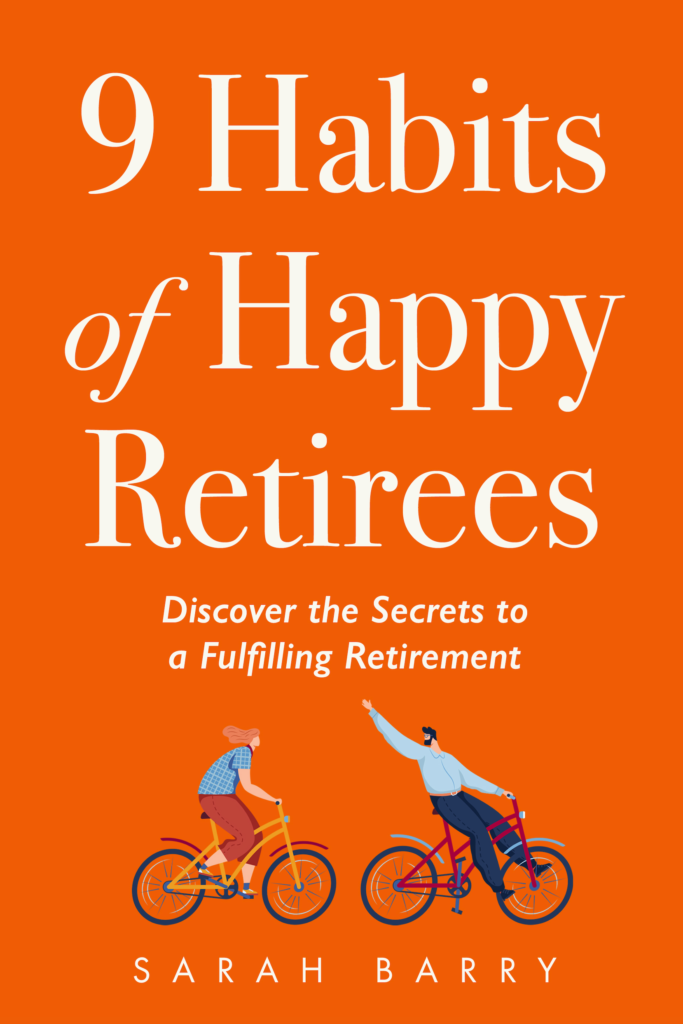
Retirement Re-defined
“9 Habits of Happy Retirees” is your guidebook to crafting a retirement lifestyle that goes beyond financial security, focusing on the habits that lead to true happiness and contentment in your golden years.
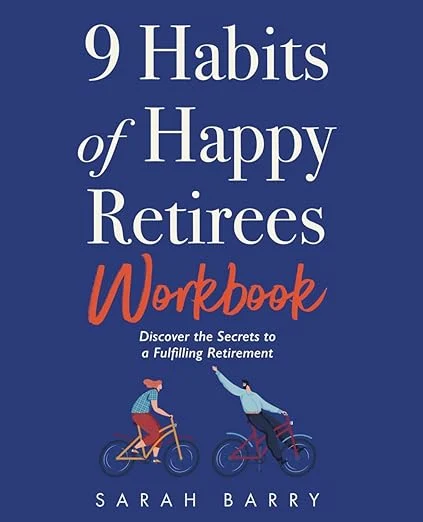
The Essential Workbook
This workbook is designed to complement the book’s theoretical foundation, it offers a hands-on approach to improving your mental, emotional, and social well-being in retirement.

Adventure Re-imagined
A fresh take on post-retirement adventure. This inspiring new book invites you to reimagine your next chapter with purpose, joy, and the freedom to explore what truly lights you up. Your journey is just beginning.
Longevity is personal. It’s also relational.
🌐 Visit www.sarahbarry.com or email hello@sarahbarry.com for coaching and tools to support your next chapter.