

Retirement May Now Last as Long as a Career
We still tend to talk about retirement as if it were a single, contained phase of life.
You retire.
You slow down.
You enjoy it.
That framing made sense when retirement was relatively short. A limited period at the end of life did not require much structural thought. It was reasonable to imagine a handful of years shaped by rest, travel, hobbies, and time with family.
But that is no longer the reality for many people.
Retirement today may stretch across fifteen, twenty, even thirty years. In some cases, longer. When a phase of life begins to rival a full career in length, it stops being a brief transition. It becomes a substantial chapter of adulthood. And substantial chapters rarely hold a single shape.
If we are honest about the time horizon, we have to admit that our language has not quite caught up.
We Still Frame Retirement Too Narrowly
Much of the retirement conversation still centres on freedom from pressure. The emphasis falls on relief — freedom from deadlines, from performance reviews, from daily responsibility. Travel plans are made. Hobbies are revived. There is often a long list of things that “will finally have time.”
None of that is wrong.
Rest matters. Space matters. Relief after sustained responsibility is not indulgent; it is healthy.
But rest as a season is different from rest as a long-term strategy.
When retirement lasts three decades, it cannot be sustained by novelty alone. The early sense of release eventually settles. The trips are taken. The house projects are completed. The first wave of deferred plans is addressed.
Then what?
A long life phase needs more than a break from what came before. It needs its own structure. That does not mean constant activity or pressure. But it does mean acknowledging that relief eventually gives way to routine — and routine needs intention.
Time Changes Things
Over long stretches of time, circumstances shift.
Energy is not constant across decades. Interests deepen, narrow, or change entirely. Health, even when generally good, becomes more central to daily decisions. Friends move away. Some friends become less mobile. Family dynamics evolve. Grandchildren grow older. Adult children face their own transitions.
The person who retires at 63 is unlikely to be living in exactly the same context at 73 or 83.
That does not mean something has gone wrong. It simply means that life continues.
The early years of retirement often feel open. There is time and energy to explore. Ten years later, the conversation may look different. Priorities feel clearer. Commitments may feel heavier or lighter depending on circumstances. There may be more focus on sustainability — on what can realistically be maintained.
If retirement lasts decades, it will contain adjustment. It will require recalibration more than once. Treating it as a fixed state sets up expectations that are difficult to sustain.
Careers Evolve. Retirement Will Too.
We accept evolution as normal in professional life.
No one expects a thirty-year career to remain static. Early roles differ from later ones. Ambition shifts. Confidence grows or redirects. Responsibilities change. Some years are expansive; others are consolidating. There are periods of growth, periods of plateau, and periods of reassessment.
We anticipate that complexity in working life.
It is reasonable to expect the same of retirement.
If retirement now rivals a career in length, it deserves to be thought about with similar seriousness. Not with anxiety or over-planning, but with recognition that it will not feel the same from beginning to end.
Just as we would not approach a career with a single, fixed plan for three decades, we cannot expect retirement to unfold without variation.
Exploration, Redesign, Refinement
In the early years, retirement often carries an exploratory quality. There is space to try activities that were once constrained by work schedules. Travel becomes easier. There is time to test interests without pressure. Some people return to hobbies; others discover entirely new ones.
Exploration can feel expansive and energising. It can also feel slightly unstructured. Freedom is welcome, but freedom still needs rhythm. Without some form, even open time can become diffuse.
After a period of exploration, many people begin to look more closely at how they want their lives to function over the long term. This is less about novelty and more about redesign.
What kind of routine feels sustainable? How much social engagement is enough? Where does contribution still matter, and in what form? What balance between activity and rest actually feels right, rather than simply desirable?
Redesign is not dramatic reinvention. It is often quieter than that. It involves small adjustments that accumulate into a stable pattern.
Later still, there can be a period of refinement. Energy and capacity may shift. Tolerance for unnecessary commitments often decreases. There is less interest in adding more and more interest in protecting what feels essential.
Refinement does not necessarily mean doing less. It means doing what fits.
These movements are not rigid stages, nor are they tied neatly to age. They are natural responses to time passing. Over decades, it would be surprising if they did not occur.
The Risk of Expecting One Emotional Tone
One of the quieter risks in long retirements is assuming that the entire phase should feel relaxed, easy, or consistently fulfilling.
When that expectation meets reality, people can feel unsettled. They may question whether they have “done retirement wrong.” They may assume dissatisfaction means they need another big change.
But no long phase of life maintains a single emotional tone.
Working life did not. Family life did not. There were years of intensity and years of steadiness. There were periods of expansion and periods of reassessment.
Retirement is unlikely to be different.
Recognising that does not diminish retirement. It makes it more sustainable.
What This Means
If retirement may last as long as a career did, it deserves periodic reassessment.
Not because something has failed. Not because rest is insufficient. But because life continues to move.
Over time, routines may need adjusting. Levels of engagement may need recalibrating. Expectations may need refining. What felt right five years ago may not feel right now.
That is not dissatisfaction. It is evolution.
A long retirement cannot be sustained by relief alone. It requires a willingness to adapt as circumstances and priorities change. It benefits from thought, from realism, and from an understanding that it will unfold in phases.
If we are going to treat retirement as a serious phase of adulthood — and for many it now is — then we need to allow it the same complexity we once granted our careers.
Not a single emotional tone.
Not a single plan.
But a willingness to let it grow and change across time.
Designing the Next Phase
If retirement may last as long as a career, it deserves thoughtful design.
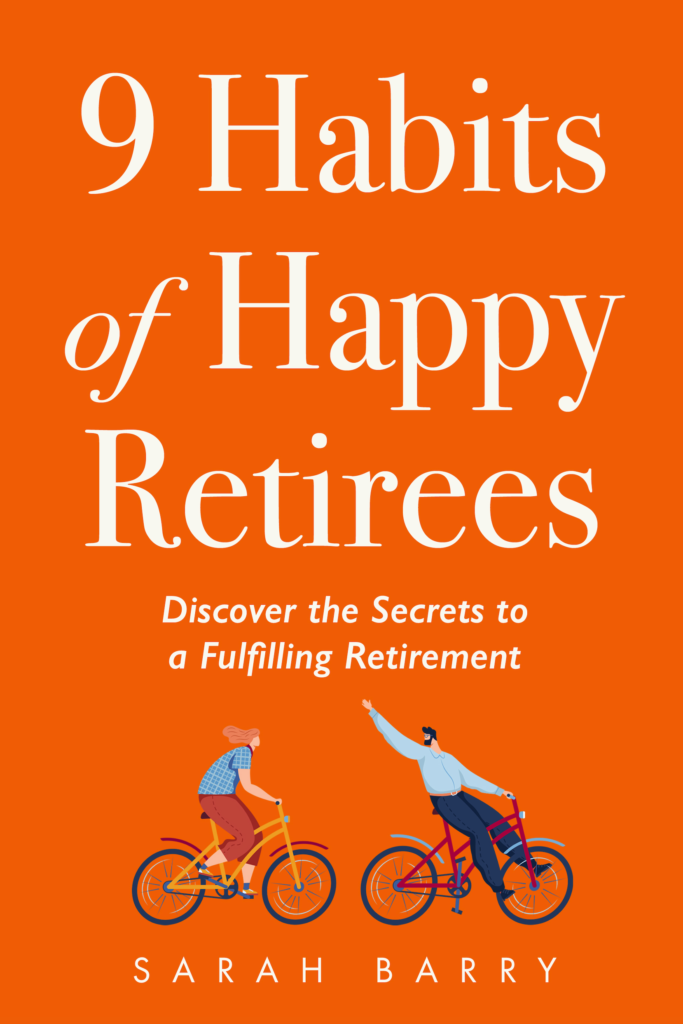
📘 9 Habits of Happy Retirees – Including habits that support connection, contribution, and wellbeing.
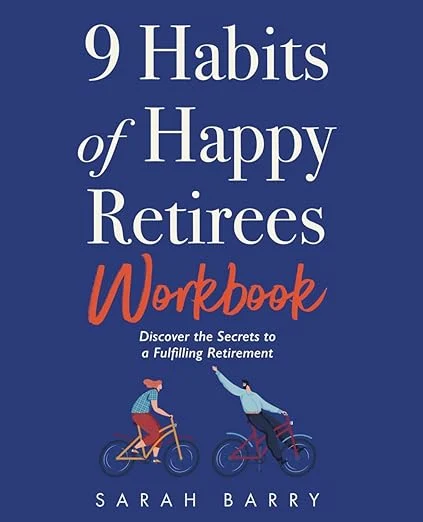
📗 The 9 Habits Workbook – Structured prompts to help you strengthen your social and emotional foundations.
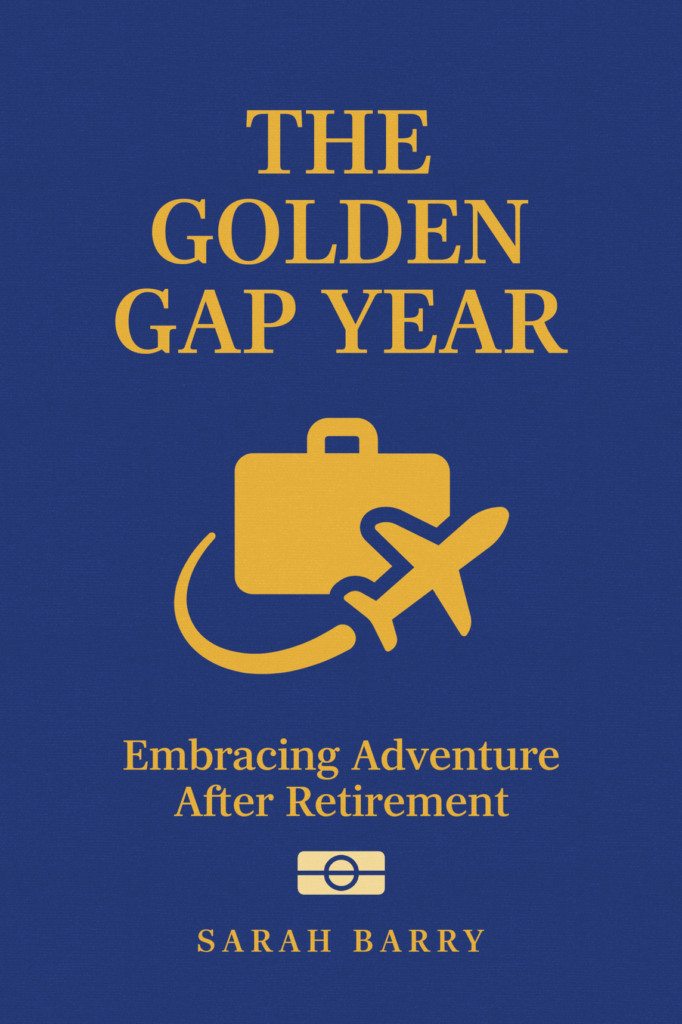
📙 The Golden Gap Year – A thoughtful exploration of how to navigate the transition into retirement with clarity.
Retirement Re-defined
“9 Habits of Happy Retirees” is your guidebook to crafting a retirement lifestyle that goes beyond financial security, focusing on the habits that lead to true happiness and contentment in your golden years.
The Essential Workbook
This workbook is designed to complement the book’s theoretical foundation, it offers a hands-on approach to improving your mental, emotional, and social well-being in retirement.
Adventure Re-imagined
A fresh take on post-retirement adventure. This inspiring new book invites you to reimagine your next chapter with purpose, joy, and the freedom to explore what truly lights you up. Your journey is just beginning.
Long phases benefit from steady structure.
🌐 Visit www.sarahbarry.com or email hello@sarahbarry.com for coaching and tools to support your next chapter.