

Retirement and Relationships: The Shift No One Prepares You For
One of the most unexpected changes in retirement isn’t about time.
It’s about relationships.
Before retirement, your days are shaped in a way that naturally creates space—both together and apart.
You have your routines.
Your partner has theirs.
Your time overlaps in the evenings, weekends, and shared moments in between.
There’s a rhythm to it.
And then retirement changes that rhythm completely.
Suddenly, you’re both home more.
More time together.
More shared space.
More opportunities to connect.
Which sounds like a good thing.
And often, it is.
But it’s also an adjustment that very few people are prepared for.
The Shift From Structured Time to Shared Time
In working life, separation is built in.
Even in close relationships, there’s a natural balance between:
- Time together
- Time apart
Work provides:
- Individual identity
- Personal space
- Independent routines
In retirement, that structure disappears.
And what replaces it is something much more fluid:
shared time.
At first, this can feel like a bonus.
More meals together.
More conversations.
More flexibility in how you spend your days.
But over time, something else can emerge.
A subtle friction.
Not necessarily conflict.
But a sense that the balance has shifted—and hasn’t yet settled.
When You’re Both Adjusting—At the Same Time
One of the reasons this phase can feel challenging is that both people are often going through their own adjustment at the same time.
You’re each:
- Redefining your routines
- Reconsidering how you spend your time
- Navigating your own sense of identity
- Figuring out what this next stage looks like
And you’re doing it alongside each other.
Which means you’re not just adjusting individually.
You’re adjusting together.
This can create moments where:
- One person wants more structure, the other wants more freedom
- One person is ready to fill their time, the other wants to slow down
- One person seeks more connection, the other needs more space
None of this is wrong.
But it does require a level of awareness that wasn’t needed before.
The Unspoken Expectations
Retirement often comes with unspoken expectations.
Things you assume will happen—but haven’t fully discussed.
You might expect:
- To spend more time together
- To travel more
- To share activities more regularly
Your partner may have a different picture:
- More independence
- More time for individual interests
- A different pace altogether
These expectations are rarely mismatched in a dramatic way.
But even small differences can create tension when they’re not acknowledged.
Because what feels like a simple preference can be experienced as:
- Disappointment
- Frustration
- Or even rejection
When in reality, it’s just a difference in how each person is adjusting.
The Question of Space
One of the most important—and often overlooked—parts of this transition is space.
Not physical space necessarily.
But personal space.
Time to:
- Think
- Move at your own pace
- Follow your own interests
- Be independent within the relationship
In working life, this space exists naturally.
In retirement, it has to be created more intentionally.
Without it, even strong relationships can feel:
- Slightly crowded
- Overly dependent
- Or out of balance
And this isn’t about needing distance.
It’s about maintaining individuality within closeness.
When Roles Begin to Shift
Another subtle change happens around roles.
In many relationships, roles have developed over time—often without much discussion.
Who does what.
Who takes the lead in certain areas.
How decisions are made.
Retirement can shift these roles.
Time availability changes.
Energy changes.
Priorities change.
You may find yourself:
- Taking on more than before
- Wanting to step back from things you used to manage
- Re-evaluating what feels fair or balanced
And your partner may be doing the same.
This can create small points of tension if expectations aren’t revisited.
Not because anything is wrong.
But because the old structure no longer quite fits.
The Emotional Undercurrent
As with many parts of retirement, the changes in relationships are often subtle.
They don’t always show up as arguments or obvious issues.
More often, they show up as:
- Irritation over small things
- A sense of being slightly out of sync
- Moments of misunderstanding
- Or simply feeling different around each other
These are easy to dismiss.
But they’re often signals that something is shifting beneath the surface.
And that shift needs attention—not correction, but awareness.
A Different Way to Approach This Stage
Rather than seeing these changes as problems, it can be helpful to see them as part of a natural transition.
Your relationship isn’t breaking down.
It’s evolving.
Just as your life structure is changing, so is the dynamic between you.
And like any transition, it benefits from being approached with intention.
What Helps Relationships Adjust More Smoothly
There’s no perfect formula for this stage.
But a few small shifts can make a meaningful difference.
1. Talk About Expectations—Even the Small Ones
Not in a heavy or formal way.
But in an open, ongoing way.
Simple conversations like:
- “What would you like more of in this phase?”
- “What feels important to you right now?”
These create understanding before frustration builds.
2. Protect Individual Time
Spending time together is valuable.
But so is maintaining your own space.
Encourage:
- Individual interests
- Separate routines
- Time apart during the week
This isn’t distance.
It’s balance.
3. Avoid Recreating Old Structures Automatically
It can be tempting to fall into familiar patterns.
To recreate routines that feel comfortable.
But this stage offers an opportunity to rethink what actually works now.
What felt right before may not be what you need going forward.
4. Be Aware of Different Adjustment Speeds
You may not move through this transition at the same pace.
One person may adapt quickly.
The other may take more time.
This isn’t a problem to fix.
It’s something to understand.
5. Focus on Connection, Not Just Time Together
Spending more time together doesn’t automatically create connection.
Connection comes from:
- Shared experiences
- Meaningful conversations
- Being present with each other
Quality matters more than quantity.
The Opportunity Within the Shift
While this phase can feel uncertain at times, it also offers something valuable:
The chance to redefine your relationship.
Not based on old routines.
But based on who you both are now.
This can lead to:
- A deeper understanding of each other
- A more intentional way of spending time together
- A relationship that evolves alongside your life
The Quiet Truth About This Stage
No one really prepares you for this part of retirement.
The practical side is often covered.
The financial side is planned.
But the relational side is rarely discussed in depth.
And yet, it’s one of the most important parts.
Because how you experience this stage of life is closely tied to the quality of your relationships.
Final Thoughts
If your relationship feels a little different in retirement, it doesn’t mean something is wrong.
It means something is changing.
And change—especially shared change—takes time to settle.
Give each other space.
Stay open.
Keep talking.
And allow this stage to shape your relationship in a way that reflects who you both are now—not just who you’ve been.
Planning in Chapters
If you prefer steady progress over rigid long-term plans, these resources can help:
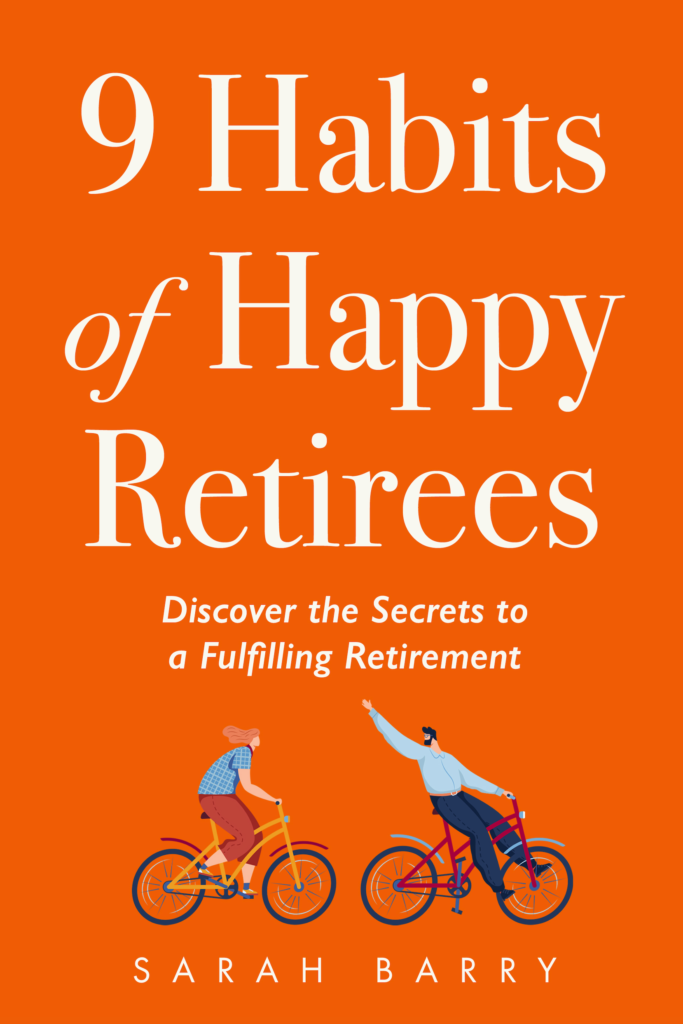
📙 9 Habits of Happy Retirees – A practical guide to building a fulfilling next chapter, one habit at a time.
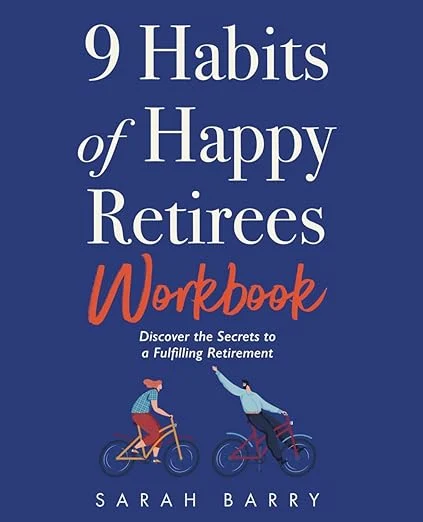
📘 The 9 Habits Workbook – Reflection prompts and simple planning tools to support clarity and forward movement.
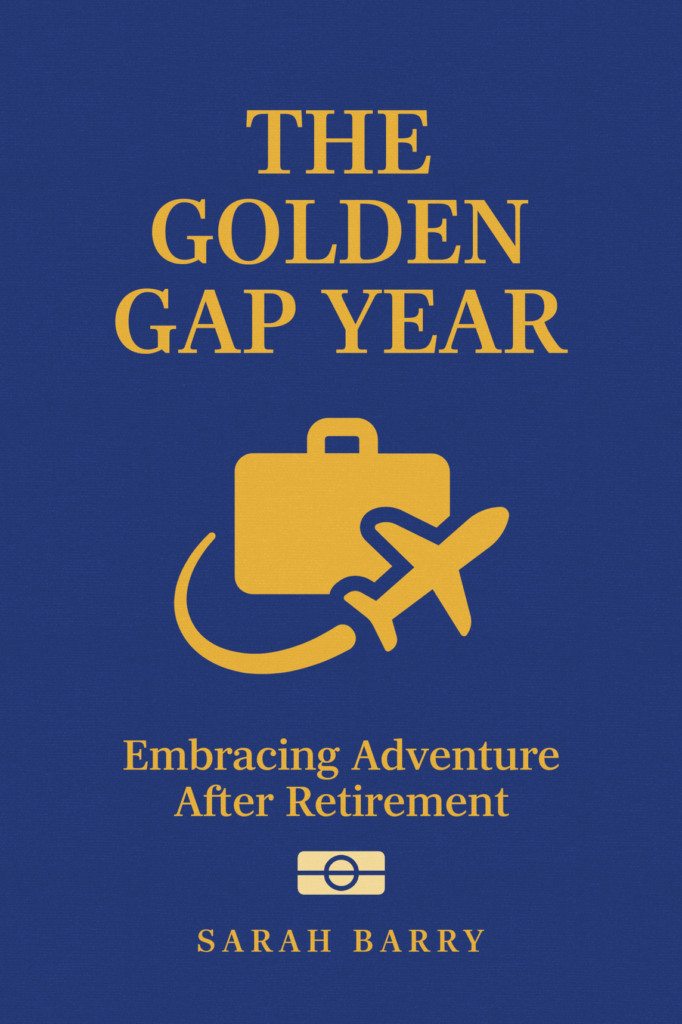
📘 The Golden Gap Year – A thoughtful approach to retirement as a transition to explore, not a single decision to make.
Retirement
Re-defined
9 Habits of Happy Retirees helps you shape a lifestyle that goes beyond financial security—focusing on the everyday habits that support meaning and balance.
The Essential Workbook
Designed to complement the book, this workbook helps turn reflection into action—supporting your mental, emotional, and social wellbeing in retirement.
Adventure
Re-imagined
The Golden Gap Year invites you to approach retirement with curiosity and intention—creating space for new experiences and personal growth.
You don’t need a forever plan. You need thoughtful phases.
🌐 Visit www.sarahbarry.com or email hello@sarahbarry.com to explore coaching and resources for your next chapter.