
The Space Between Who You Were and Who You’re Becoming
We tend to imagine life transitions as moments.
You leave a job.
You retire.
You move house.
Your children grow up.
A relationship ends.
A new chapter begins.
There’s an event. A decision. A date in the calendar.
But what we don’t talk about nearly enough is what comes after.
The stretch of time where you are no longer fully who you were — but not yet settled into who you are becoming.
That space rarely feels decisive.
It feels… unsteady.
At first, there can be relief.
The pressure eases.
The decision is made.
The change has happened.
Then comes openness. Space. Possibility.
And then, often quietly, something else.
A wobble.
You may feel slightly less confident in ways you can’t quite explain.
Your routines no longer anchor you in the same way.
Your sense of identity feels softer at the edges.
From the outside, everything may look fine.
Inside, something is rearranging itself.
We don’t always recognise this as a normal phase.
Instead, we interpret it as a problem.
Why don’t I feel clear yet?
Why don’t I feel certain?
Why don’t I feel like myself?
But identity doesn’t update overnight.
For years — sometimes decades — it has been reinforced by repetition.
You showed up somewhere.
You were known in a particular way.
You responded to expectations.
Your days had shape.
That shape did more than organise your time.
It quietly stabilised who you understood yourself to be.
When that structure shifts or disappears, the reinforcement softens.
And when reinforcement softens, identity can feel less solid.
Not because you are lost.
But because something is recalibrating.
There’s a cultural layer here too.
We admire clarity.
We celebrate reinvention.
We rush toward “What’s next?”
The story we’re sold is simple:
End → Pivot → Thrive.
But lived experience is rarely that tidy.
There is usually a middle chapter.
End → Uncertainty → Adjustment → Gradual emergence.
That middle chapter is quieter.
Less impressive.
Harder to explain.
It doesn’t photograph well.
It doesn’t lend itself to bold declarations.
But it is where real integration happens.
In this in-between space, the mind searches for definition.
It wants something firm to stand on.
And when it can’t find it, restlessness creeps in.
Days may feel slightly blurred.
Motivation may fluctuate.
You might question yourself in ways you didn’t before.
This is often where people rush.
They grasp for a new title.
A new plan.
A new identity.
Anything to feel solid again.
But identity that is forced tends to feel thin.
Identity that is allowed to form slowly tends to feel steadier.
There is something important about this middle space that we underestimate.
It is not empty.
It is formative.
It is where values quietly shift.
Where pace recalibrates.
Where what used to matter begins to matter differently.
It is where identity becomes less about performance
and more about alignment.
That kind of becoming cannot be hurried.
Transitions often follow a rhythm.
Relief.
Openness.
Uncertainty.
Experimentation.
Gradual clarity.
If you are in the uncertain part, it does not mean you are behind.
It means you are mid-transition.
And mid-transition rarely feels polished.
Another layer to this is structure.
When external expectations fall away — titles, timetables, defined responsibilities — you lose more than activity.
You lose scaffolding.
And scaffolding quietly holds identity in place.
So part of navigating this in-between space is not dramatic reinvention.
It is gentle structure.
Rhythm.
Small commitments.
Conversations that stretch you slightly.
Experiments that don’t require certainty.
Enough shape to hold you while something new takes form.
The space between who you were and who you’re becoming is not weakness.
It is movement.
It asks for patience rather than urgency.
Curiosity rather than control.
Steadiness rather than speed.
And perhaps the most important shift is this:
Instead of asking,
“Why don’t I feel clear yet?”
You might ask,
“What is still rearranging beneath the surface?”
A few questions to sit with
If you find yourself in this in-between season, you might gently consider:
- What parts of my former identity genuinely still belong to me — and which were tied to context?
- Where am I mistaking uncertainty for failure?
- What small rhythms could stabilise this phase without forcing clarity?
- What feels more aligned now, even if it’s subtle?
You don’t need to define the next version of yourself in one decisive move.
Sometimes it is enough to recognise where you are — and trust that becoming is still underway.
Continue the Journey
If you’re navigating a period of transition, my books explore how to move forward with clarity and intention:
📘 9 Habits of Happy Retirees – Including habits that support connection, contribution, and wellbeing.
📗 The 9 Habits Workbook – Structured prompts to help you strengthen your social and emotional foundations.
📙 The Golden Gap Year – A thoughtful exploration of how to navigate the transition into retirement with clarity.
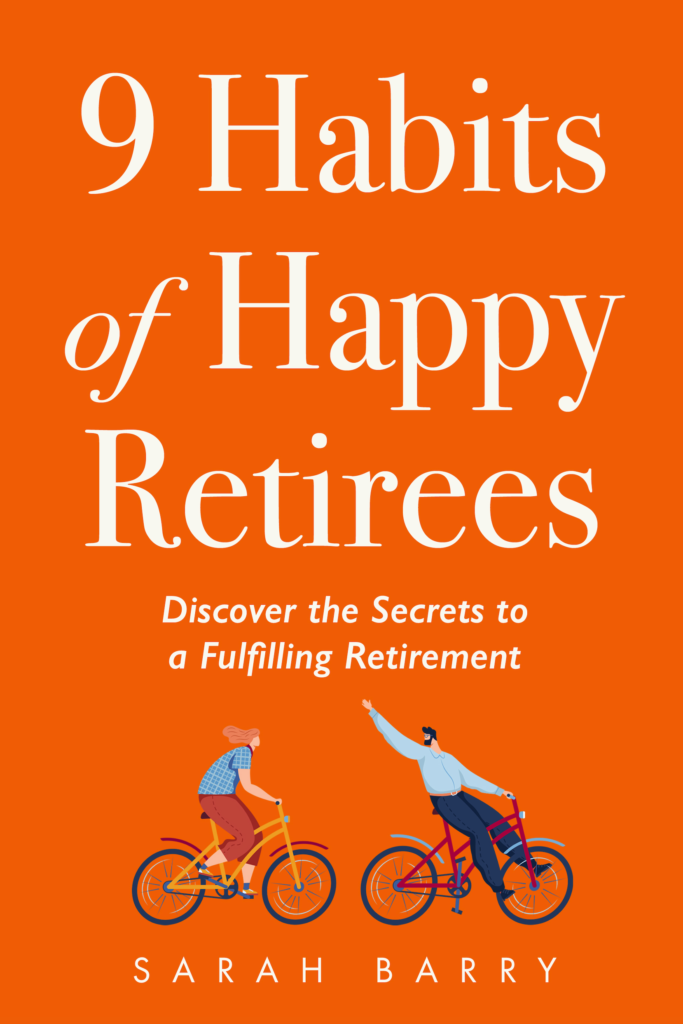
Retirement Re-defined
“9 Habits of Happy Retirees” is your guidebook to crafting a retirement lifestyle that goes beyond financial security, focusing on the habits that lead to true happiness and contentment in your golden years.
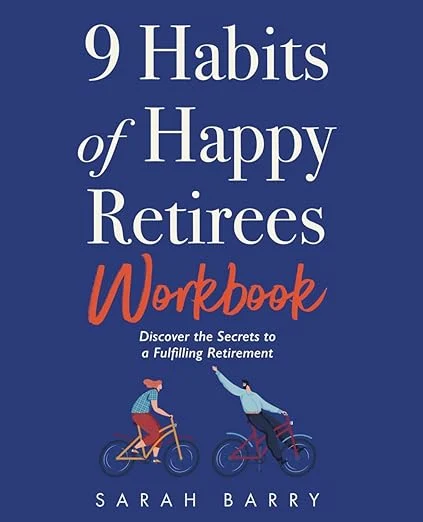
The Essential Workbook
This workbook is designed to complement the book’s theoretical foundation, it offers a hands-on approach to improving your mental, emotional, and social well-being in retirement.
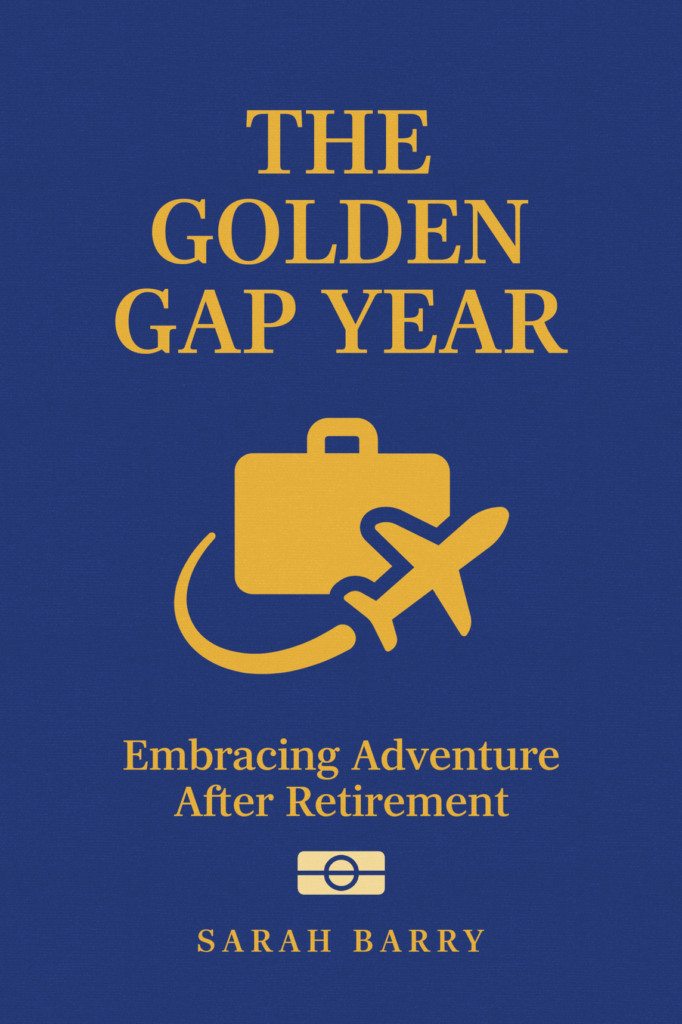
Adventure Re-imagined
A fresh take on post-retirement adventure. This inspiring new book invites you to reimagine your next chapter with purpose, joy, and the freedom to explore what truly lights you up. Your journey is just beginning.
You don’t have to rush clarity. You can build it gradually.
🌐 Visit www.sarahbarry.com or email hello@sarahbarry.com for coaching and tools to support your next chapter.