

How to Build a Life Bigger Than Your Career
For most of our adult lives, work occupies far more space than we realize.
It shapes our routines, influences our decisions, determines who we spend time with, and provides a ready-made answer to one of the most common questions we’re ever asked: “What do you do?”
Because this arrangement develops gradually, it rarely feels unusual. Work becomes woven into the fabric of everyday life. It provides structure to our weeks, goals to pursue, challenges to overcome, and a sense of progression through time. Even those who don’t particularly enjoy their jobs often find that work provides something deeper than income. It provides a framework.
The influence of a career extends beyond the hours spent at a desk, in meetings, on job sites, or travelling for business. Careers shape how we see ourselves. They give us roles to inhabit and identities to grow into. Over time, the distinction between what we do and who we are can become surprisingly blurred.
Retirement has a way of exposing that reality.
One of the reasons retirement feels more complicated than many people expect is that it isn’t simply the end of work. It is often the first time in decades that people are asked to consider who they are outside of it.
The Space Work Leaves Behind
When people imagine retirement, they often focus on the practical changes. There will be more free time, fewer obligations, and greater flexibility. The daily pressures of work will disappear. The alarm clock may become optional.
What receives far less attention is the space that work leaves behind.
At first, that space can feel liberating. There is relief in stepping away from responsibilities that may have dominated life for years. The freedom can feel exciting, particularly during the early months. Many retirees enjoy travel, reconnect with hobbies, spend more time with family, or simply appreciate having greater control over their schedule.
Eventually, however, a different experience often emerges.
The absence of work is no longer a novelty. It becomes reality.
This is when many retirees begin to notice how much of their identity was connected to their career. Not because they were obsessed with work, but because work had quietly become one of the primary ways they understood themselves. It was where their expertise was recognised, where their contribution was visible, and where many of their relationships were formed.
When that role disappears, the question is no longer what you’re retiring from.
The question becomes what you’re growing towards.
More Than a Job Title
One of the misconceptions about retirement is that building a fulfilling life requires replacing work with something equally significant.
People often feel pressure to discover a grand new purpose, launch a second career, start a business, write a book, travel the world, or pursue some other impressive reinvention.
For some people, those paths are exactly right.
For many others, they are unnecessary.
The challenge is not replacing one identity with another. It is allowing identity to become broader than it was before.
During our working years, it is easy for a single role to dominate. We become known as the executive, the teacher, the engineer, the business owner, the manager, the consultant, or the specialist. These roles may represent only part of who we are, but they often become the part that receives the most attention.
Retirement creates an opportunity to rediscover the other parts.
The curious part.
The creative part.
The adventurous part.
The nurturing part.
The learner.
The mentor.
The friend.
The community member.
The person who enjoys doing things simply because they enjoy them.
A life bigger than a career is rarely built by finding one new identity. It is built by allowing multiple parts of yourself to take up more space.
Expanding Rather Than Replacing
The retirees who seem to navigate this transition most successfully are often those who view retirement as an expansion rather than a replacement.
They do not spend their time trying to recreate the structure, recognition, or status they once had. Nor do they feel compelled to reject everything connected to their previous career.
Instead, they carry forward what still matters while creating room for new experiences, relationships, and interests.
Their professional skills and experience remain valuable, but they are no longer the entire story.
This distinction matters because many people approach retirement as though they must choose between holding on to the past or completely reinventing themselves. In reality, most fulfilling retirements involve a blend of continuity and change.
The qualities that served you throughout your career—curiosity, resilience, creativity, generosity, discipline, leadership, humor, or compassion—do not disappear when work ends.
They simply find new places to express themselves.
The Freedom to Become More Fully Yourself
Perhaps the greatest opportunity retirement offers is not freedom from work.
It is freedom from being defined primarily by work.
For decades, much of life may have been shaped by practical considerations. Career progression, financial commitments, family responsibilities, and professional expectations all influence the choices we make. Retirement creates space to ask different questions.
What interests me now?
Who do I enjoy spending time with?
What experiences do I want more of?
What kind of person do I want to become?
These questions are not about productivity. They are about possibility.
The answers are rarely found all at once. They emerge gradually through exploration, experimentation, and paying attention to what feels meaningful.
A life bigger than your career is not something you design on paper and then execute according to plan.
It is something you discover by giving yourself permission to be more than one thing.
Final Thoughts
Most people spend years preparing financially for retirement. Far fewer prepare for the identity shift that comes with it.
Yet one of the most important transitions in retirement is learning that your career was only ever one chapter of your story.
An important chapter, certainly. A chapter that shaped you, challenged you, and contributed to who you have become.
But not the whole story.
Retirement is not an invitation to erase your professional identity. It is an opportunity to place it in a wider context and to explore the parts of yourself that may have received less attention along the way.
The goal is not to build a new life that replaces your career.
The goal is to build a life that is bigger than it.
Continue Exploring
If you’re exploring what this next chapter could look like and want practical ways to create direction, structure, and meaning, you’ll find further guidance in my books 9 Habits of Happy Retirees and The Golden Gap Year, along with additional resources at SarahBarry.com.
📙 9 Habits of Happy Retirees – Practical strategies for creating a fulfilling retirement beyond financial planning.
📘 The 9 Habits Workbook – Reflection exercises and planning tools to help you turn ideas into action.
📘 The Golden Gap Year – A fresh approach to retirement as a period of exploration, experimentation, and discovery.
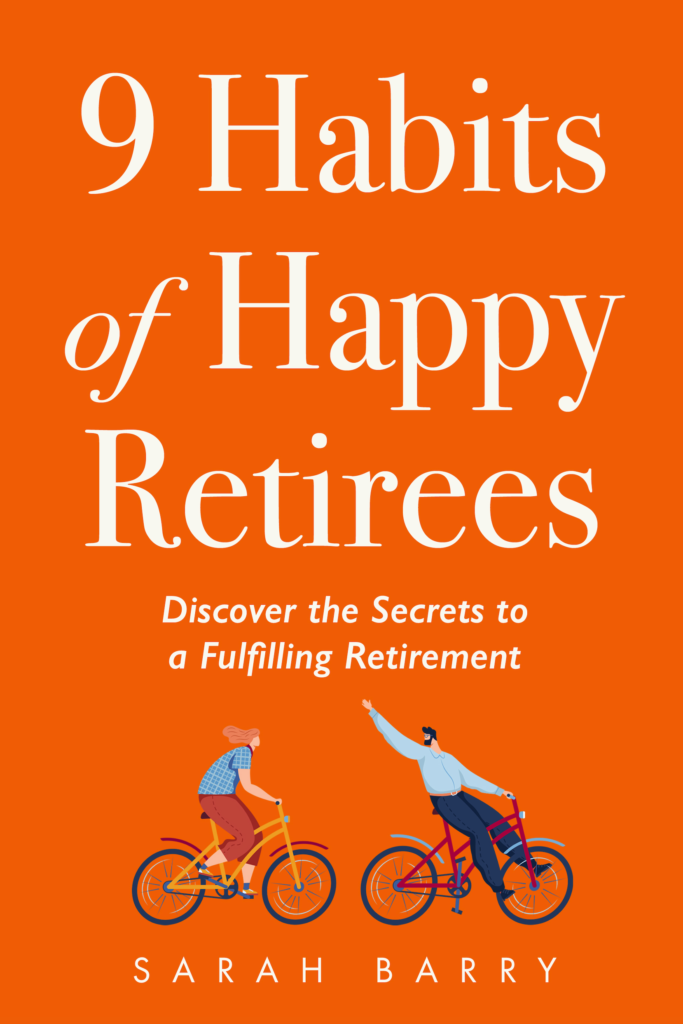
Retirement
Re-defined
9 Habits of Happy Retirees helps you shape a lifestyle that goes beyond financial security—focusing on the everyday habits that support meaning and balance.
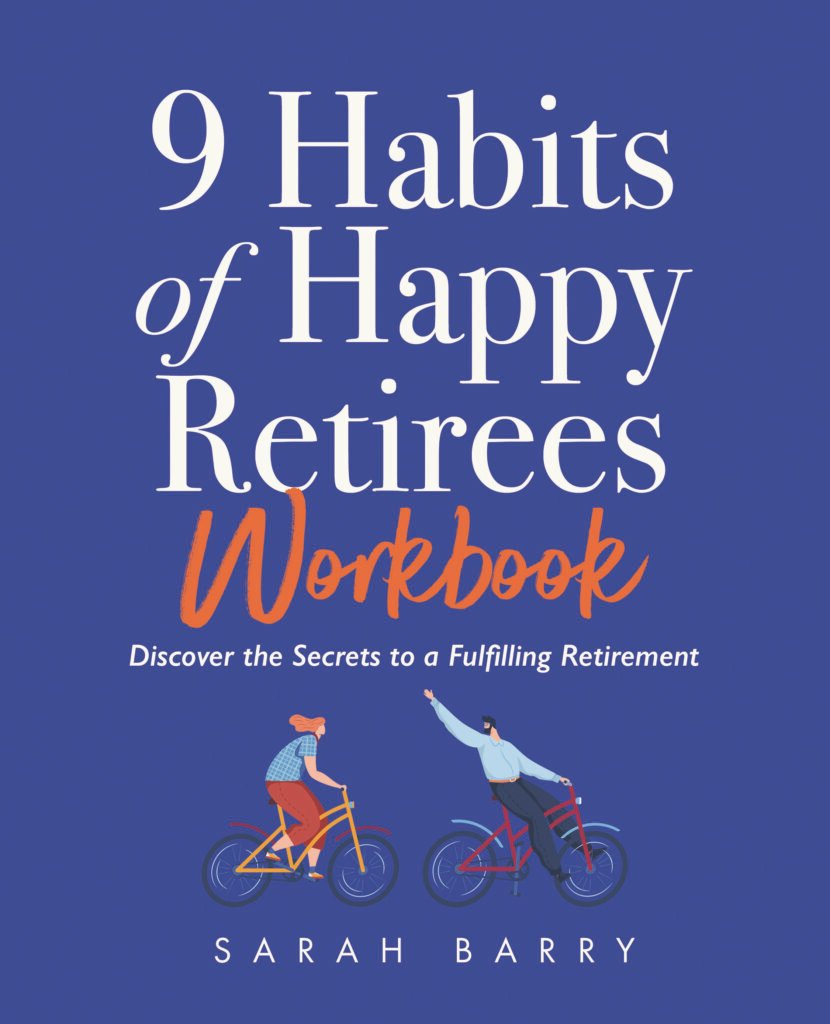
The Essential Workbook
Designed to complement the book, this workbook helps turn reflection into action—supporting your mental, emotional, and social wellbeing in retirement.
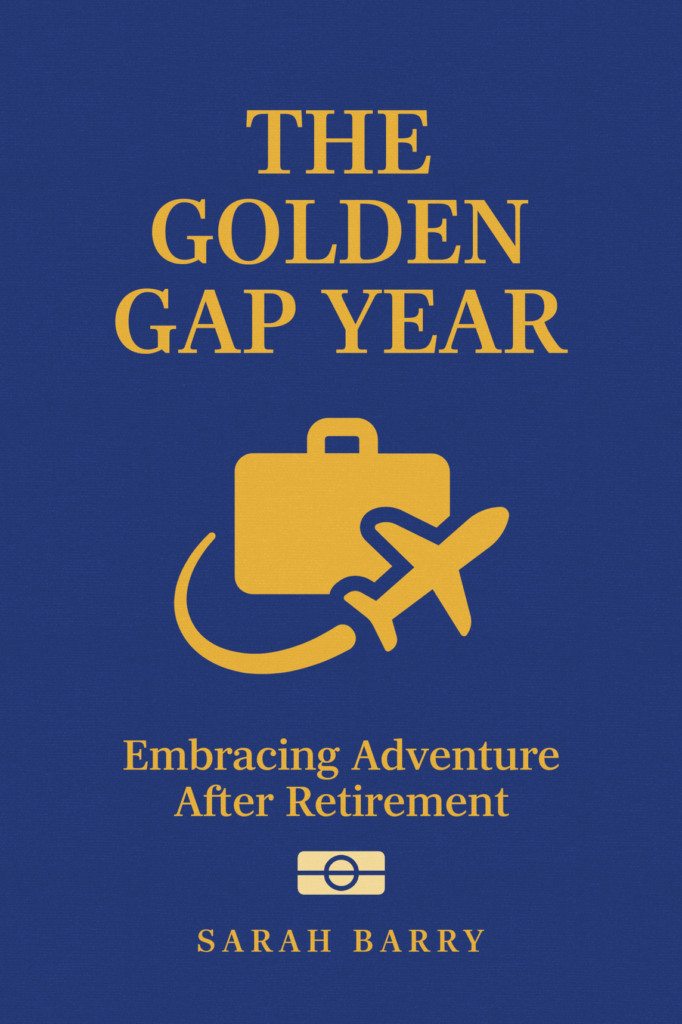
Adventure
Re-imagined
The Golden Gap Year invites you to approach retirement with curiosity and intention—creating space for new experiences and personal growth.
You don’t need a forever plan. You need thoughtful phases.
🌐 Visit www.sarahbarry.com or email hello@sarahbarry.com to explore coaching and resources for your next chapter.