

Why Your Old Goals No Longer Fit
For much of our lives, goals provide direction.
They help us make decisions, focus our energy, and measure progress. We set goals around education, careers, finances, family, health, and achievement. Some are ambitious and long-term. Others are practical and immediate. Together, they create a sense of momentum and help answer a simple question: what am I working towards?
The structure of adult life tends to reinforce this way of thinking. There is usually a next step to pursue, a milestone to reach, or a challenge to overcome. Even when the path isn’t entirely clear, there is often a general sense that life is moving in a particular direction.
Then retirement arrives, and something shifts.
Many people discover that the goals which guided them for decades no longer carry the same weight. The objectives that once felt motivating can begin to feel irrelevant. Others are achieved, leaving an unexpected question in their place. If you’ve spent years working towards retirement, what happens when you finally get there?
This is one of the quieter adjustments of retirement. It doesn’t attract much attention because it rarely appears as a problem. Yet beneath the surface, many retirees find themselves wrestling with a subtle loss of direction. The old goals no longer fit, but the new ones have not yet fully emerged.
That can feel surprisingly unsettling.
When Success Stops Providing Answers
One of the assumptions many people carry into retirement is that achieving their long-term goals will automatically create lasting fulfilment. It seems reasonable enough. After all, we’ve been conditioned to believe that satisfaction lives on the other side of accomplishment.
Finish the degree.
Get the promotion.
Pay off the mortgage.
Raise the children.
Reach retirement.
For years, these goals provide purpose because they give shape to our decisions and our daily lives. The challenge is that goals are designed to help us arrive somewhere. They are not necessarily designed to tell us what comes next.
Retirement exposes this distinction.
Many people reach a point where they realise they have spent decades pursuing objectives without spending much time considering how they actually want to live once those objectives are achieved. The question shifts from achievement to experience. It becomes less about reaching the destination and more about understanding what makes the journey meaningful.
This is often where traditional goal-setting begins to feel inadequate.
The issue isn’t that goals stop mattering. It’s that the nature of the goals changes.
From Achievement to Alignment
During our working years, goals are often externally focused. They involve outcomes that can be measured and observed. Retirement invites a different kind of conversation.
Instead of asking, “What do I want to achieve?” many people find themselves asking, “What do I want more of in my life?”
The answers are often less concrete.
More connection.
More creativity.
More learning.
More adventure.
More contribution.
More peace.
These are not goals in the traditional sense. They don’t have a finish line. They can’t be crossed off a list or completed by a particular date. Instead, they function more like directions than destinations.
This can feel uncomfortable for people who are used to certainty and structure. A goal provides clarity. A direction requires exploration.
Yet this shift is often one of the most important parts of building a fulfilling retirement.
Life becomes less about pursuing the next milestone and more about creating experiences that reflect your values, interests, and priorities.
The Problem With Replacing One Goal With Another
When retirees feel the loss of direction, there is often a temptation to solve it by creating a new set of goals as quickly as possible.
Sometimes this works.
Sometimes it simply recreates the same pattern in a different form.
People become determined to visit a certain number of countries, join multiple committees, learn several new skills, or fill their calendar with projects. There is nothing wrong with any of these pursuits, but they can become another version of the achievement treadmill if they are pursued without reflection.
The question is not whether a goal sounds impressive.
The question is whether it genuinely matters to you.
Retirement creates an opportunity to become more selective about where your energy goes. It allows you to choose activities because they are meaningful rather than because they look productive.
That distinction matters more than many people realise.
Learning to Follow Curiosity
One of the most valuable skills in retirement may be curiosity.
Unlike goals, curiosity doesn’t require a detailed plan. It simply asks you to pay attention to what interests, energises, or engages you.
This can feel unfamiliar at first. Many people are so accustomed to pursuing outcomes that they overlook the value of exploration.
Yet some of the most rewarding parts of retirement emerge in exactly this way.
A hobby becomes a passion.
A volunteer role becomes a source of purpose.
A casual interest develops into a meaningful part of everyday life.
None of these experiences begin with a carefully constructed five-year plan. They begin with curiosity and a willingness to see where it leads.
Retirement provides a rare opportunity to follow interests for their own sake rather than for career advancement, financial reward, or external recognition.
That freedom can be surprisingly powerful.
Final Thoughts
If your old goals no longer fit, it doesn’t mean you’ve lost your sense of direction.
It may simply mean you’ve outgrown the goals that once served you.
Retirement invites a different relationship with the future. Instead of constantly pursuing the next milestone, there is an opportunity to focus on how you want to spend your time, who you want to become, and what makes life feel meaningful.
The challenge is not finding a new goal to replace the old ones.
It’s giving yourself permission to build a life guided by values, curiosity, and intention rather than achievement alone.
Because sometimes the most important question is no longer, “What am I working towards?”
It’s, “What am I creating with the time I have now?”
Continue Exploring
If you’re exploring what this next chapter could look like and want practical ways to create direction, structure, and meaning, you’ll find further guidance in my books 9 Habits of Happy Retirees and The Golden Gap Year, along with additional resources at SarahBarry.com.
📙 9 Habits of Happy Retirees – Practical strategies for creating a fulfilling retirement beyond financial planning.
📘 The 9 Habits Workbook – Reflection exercises and planning tools to help you turn ideas into action.
📘 The Golden Gap Year – A fresh approach to retirement as a period of exploration, experimentation, and discovery.
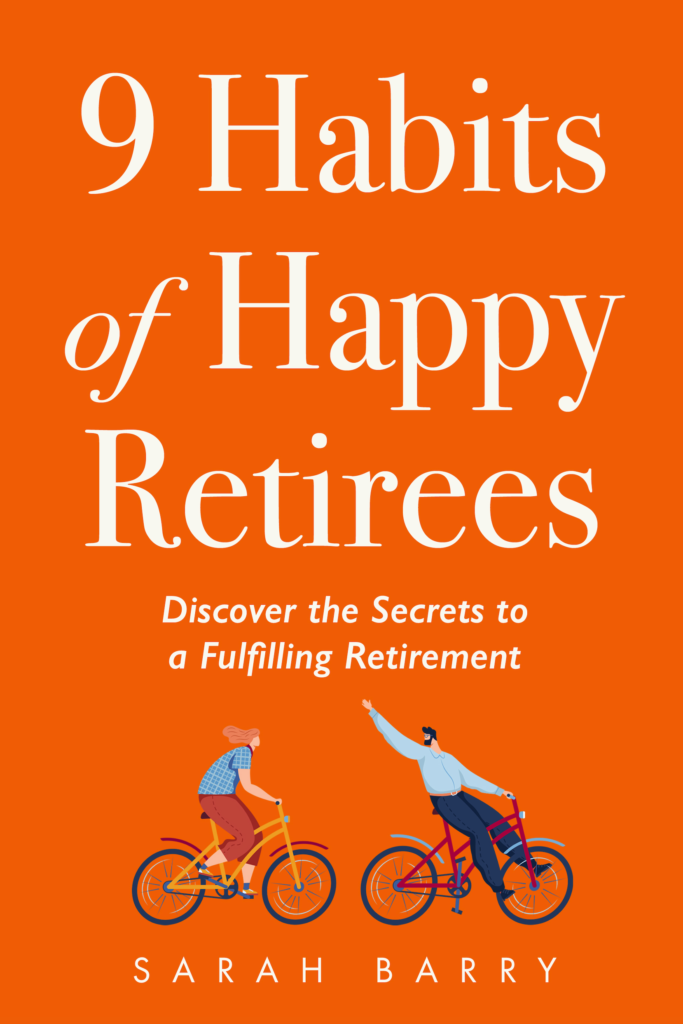
Retirement
Re-defined
9 Habits of Happy Retirees helps you shape a lifestyle that goes beyond financial security—focusing on the everyday habits that support meaning and balance.
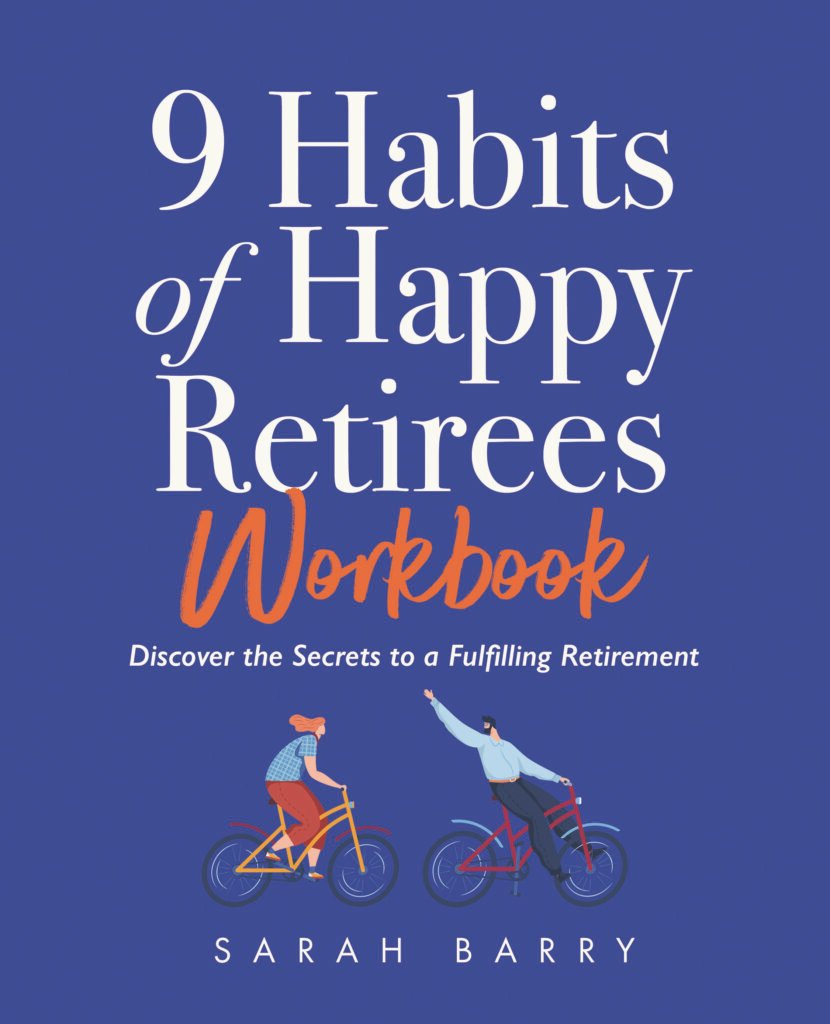
The Essential Workbook
Designed to complement the book, this workbook helps turn reflection into action—supporting your mental, emotional, and social wellbeing in retirement.
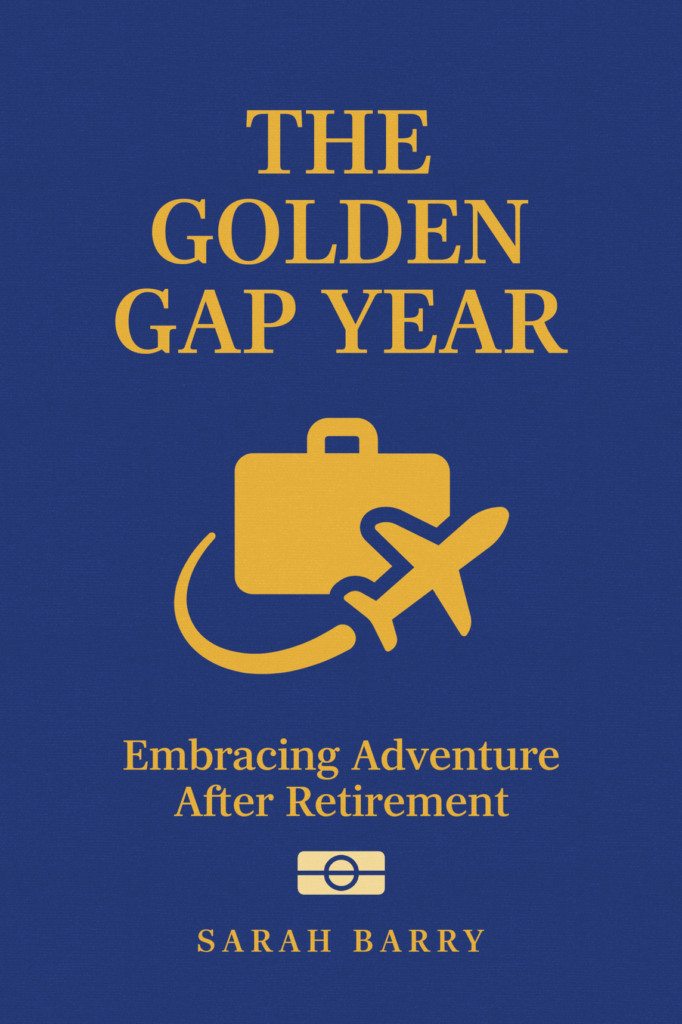
Adventure
Re-imagined
The Golden Gap Year invites you to approach retirement with curiosity and intention—creating space for new experiences and personal growth.
You don’t need a forever plan. You need thoughtful phases.
🌐 Visit www.sarahbarry.com or email hello@sarahbarry.com to explore coaching and resources for your next chapter.
