
The Pressure to Leave a Legacy
There comes a point in many retirements when a well-meaning conversation takes an unexpected turn.
“So, what’s next?”
Perhaps you’ve just left a long career. Perhaps you’ve been retired for a year or two. The discussion begins with travel or hobbies before someone says something that sounds encouraging.
“You’ve got so much experience. You should write a book.”
“You need to leave a legacy.”
“This is your chance to make a real difference.”
The comments are intended as compliments. They suggest that the years ahead should be significant, purposeful, and well spent. Yet they can also create a quiet pressure that many retirees never expected.
The pressure to do something important.
Not simply to enjoy retirement, but to justify it.
For people who have spent decades building careers, leading organisations, raising families, or contributing to their communities, this expectation can feel strangely familiar. Retirement was supposed to be an opportunity to step away from constant achievement, yet it sometimes arrives carrying another performance target.
This time, the performance is called legacy.
Achievement Has a Long Shadow
Working life teaches us to think in terms of outcomes.
Projects are completed. Goals are achieved. Careers progress. Success is often measured by visible results and lasting accomplishments. Even people who never considered themselves particularly ambitious spend years living within systems that reward progress and recognise achievement.
It is hardly surprising that this mindset follows us into retirement.
The difference is that the goals become less clearly defined.
Instead of climbing a career ladder, people begin wondering what they will leave behind. They ask themselves whether they have done enough, contributed enough, or made enough of an impact. Some feel an urgency to create something lasting, as though retirement should culminate in one final, meaningful accomplishment.
There is nothing wrong with writing a book, starting a charity, mentoring others, or building something that outlives you.
The problem begins when these pursuits are driven by obligation rather than desire.
Retirement is often described as freedom, yet the pressure to leave a legacy can quietly replace one set of expectations with another.
The Quiet Lives We Remember
When people talk about legacy, they often imagine something visible.
A business.
A foundation.
A published work.
A major achievement that continues long after they are gone.
Yet if you think about the people who have shaped your own life, chances are many of them left no public legacy at all.
Perhaps it was a teacher who believed in you before you believed in yourself.
A neighbour who always made time for others.
A grandparent whose patience taught you more than any lecture ever could.
A colleague who quietly encouraged people without expecting recognition.
Their influence was real.
It simply wasn’t measured in monuments or headlines.
One of the curious things about later life is that we often become more interested in the quality of our relationships than the scale of our achievements. We begin to understand that meaning is not always found in what reaches the most people.
Sometimes it is found in how deeply we affect a few.
Presence Before Legacy
There is another difficulty with chasing legacy.
It keeps our attention fixed on the future.
Legacy asks how we will be remembered.
Presence asks how we are living today.
The two are not the same.
It is entirely possible to spend so much time worrying about making a lasting impact that we overlook the people and moments directly in front of us.
Retirement offers an opportunity to slow down enough to notice those moments.
A conversation with an old friend.
Time spent with grandchildren.
Supporting a neighbour through a difficult period.
Sharing experience with someone just beginning their career.
These moments rarely feel historic while they are happening.
Yet they are often the things that stay with people long after specific achievements have faded.
Perhaps the greatest contribution we make is not through one extraordinary act, but through the countless ordinary ways we show up for others over many years.
A Life That Doesn't Need to Prove Itself
One of the freedoms retirement can offer is the chance to step away from the constant need to demonstrate value.
For much of our working lives, we are evaluated, measured, and rewarded. Retirement gradually loosens that grip. It creates space to ask a different question.
Not, “What impressive thing should I do next?”
But, “What kind of life feels worth living?”
The answer may involve significant projects.
It may involve none at all.
For some people, retirement becomes a period of remarkable creativity and contribution. For others, it is a quieter season centred on family, friendships, learning, and simple pleasures.
Neither path is more meaningful than the other.
The value lies not in how visible your contribution becomes, but in whether your life reflects the things that matter most to you.
Final Thoughts
The desire to leave the world a better place is a generous instinct.
But retirement does not come with an obligation to produce one final achievement or create a legacy that can be measured long after you are gone.
For many people, the most meaningful lives are not remembered because they were extraordinary.
They are remembered because they were deeply lived.
The kindness that was offered.
The wisdom that was shared.
The time that was given.
The relationships that were nurtured.
These things rarely appear on lists of achievements.
Yet they are often the legacy that matters most.
Perhaps retirement is not asking you to leave something bigger behind.
Perhaps it is simply inviting you to be more fully present in the life you have now.
Continue Exploring
If you’re exploring what this next chapter could look like and want practical ways to create direction, structure, and meaning, you’ll find further guidance in my books 9 Habits of Happy Retirees and The Golden Gap Year, along with additional resources at SarahBarry.com.
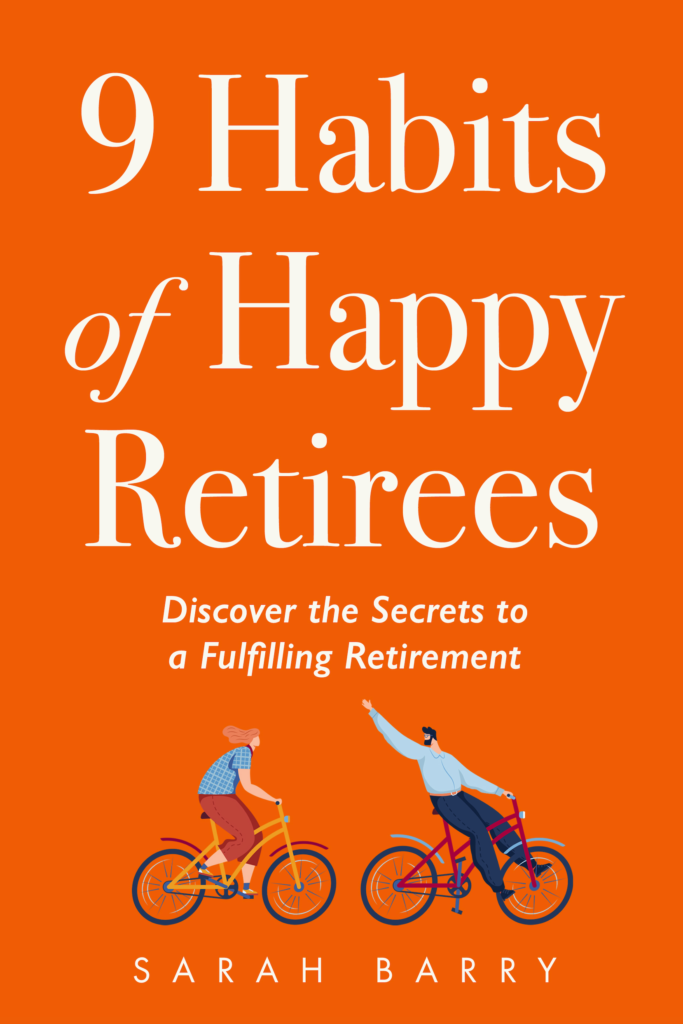
📙 9 Habits of Happy Retirees – Practical strategies for creating a fulfilling retirement beyond financial planning.
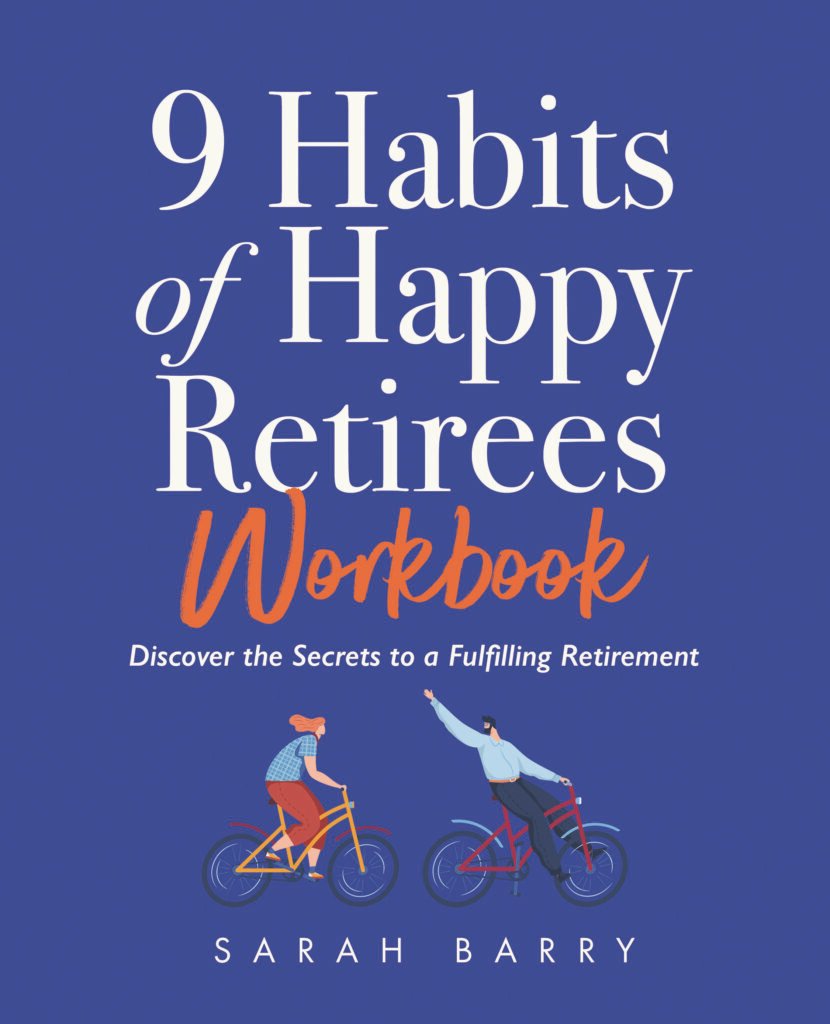
📘 The 9 Habits Workbook – Reflection exercises and planning tools to help you turn ideas into action.
Retirement
Re-defined
9 Habits of Happy Retirees helps you shape a lifestyle that goes beyond financial security—focusing on the everyday habits that support meaning and balance.
The Essential Workbook
Designed to complement the book, this workbook helps turn reflection into action—supporting your mental, emotional, and social wellbeing in retirement.
You don’t need a forever plan. You need thoughtful phases.
🌐 Visit www.sarahbarry.com or email hello@sarahbarry.com to explore coaching and resources for your next chapter.
