
Being a Beginner Again After a Career of Expertise
For most of our working lives, we spend far more time becoming experts than beginners.
Experience accumulates almost without us noticing. We learn the language of our profession, understand the unwritten rules, recognise problems before they fully emerge, and make decisions with a confidence that only years of practice can provide. By the later stages of a career, many people rarely have to think about the basics. They have earned the comfort that comes with competence.
Then retirement presents an unexpected challenge.
Not the challenge of leaving work.
The challenge of starting something new.
It might be a golf lesson, a pottery class, a language course, or learning to play an instrument. It could be volunteering in an unfamiliar environment or joining a walking group where everyone else seems to know each other already.
Whatever the situation, the feeling is remarkably similar.
You are no longer the person who knows what they’re doing.
You are the beginner.
For many retirees, that shift is far more uncomfortable than they expected.
The Comfort of Competence
Competence is one of the great rewards of a long career.
It is easy to overlook because it develops gradually. Every year adds another layer of experience until eventually difficult tasks become routine. Decisions that once required careful thought become almost instinctive. People seek your advice because they trust your judgement. Confidence grows not because you believe you know everything, but because you have successfully navigated enough situations to know you can usually find a way through.
That confidence quietly becomes part of your identity.
It is one of the reasons retirement can feel disorienting. The professional environment that reinforced your expertise disappears almost overnight. The knowledge remains, but the opportunities to use it become less frequent.
Many retirees naturally begin looking for new interests, only to discover something they haven’t experienced for years.
Being bad at something.
Not hopeless.
Just inexperienced.
It is an unfamiliar feeling, and not always a comfortable one.
Why We Avoid Being Beginners
Most people tell themselves they would like to try something new in retirement.
Far fewer actually do.
It is tempting to assume the obstacle is motivation, but often it is something else entirely.
It is pride.
After spending decades becoming capable and respected, willingly placing yourself in situations where you don’t know the answers can feel strangely exposing. The first painting looks clumsy. The first tennis lesson feels awkward. The first attempts at speaking another language rarely resemble the conversations you imagined having.
None of this is unusual.
Yet many people quietly abandon new pursuits before they have given themselves a chance to improve.
Not because they lacked interest.
Because they disliked feeling inexperienced.
The irony is that this discomfort has very little to do with retirement itself.
It is simply something we have not practised for a very long time.
Rediscovering the Joy of Learning
Children rarely worry about being beginners.
They expect it.
Every new experience is approached with curiosity rather than judgement. Falling over is part of learning to ride a bicycle. Playing the wrong notes is part of learning the piano. Mistakes are expected because they are understood to be temporary.
Somewhere along the way, many adults lose that freedom.
Competence becomes something to protect rather than something that was once earned through persistence. We become reluctant to attempt anything that might expose what we don’t yet know.
Retirement offers a rare opportunity to rediscover a different relationship with learning.
Without the pressure of career advancement or performance reviews, there is room to pursue interests simply because they are enjoyable. Progress becomes personal rather than competitive. Improvement still matters, but it no longer needs to happen quickly.
There is something quietly liberating about giving yourself permission to be a novice again.
Not because you have forgotten what you know.
Because you are discovering something you never knew before.
The Beginner's Advantage
It is easy to assume that expertise is always preferable to inexperience.
In many situations, it is.
Yet beginners possess something experts sometimes lose.
Curiosity.
Experts often approach problems through established patterns. Beginners ask different questions because they have no habits to defend. They notice details others overlook simply because everything is new.
Retirement creates an ideal environment for this kind of curiosity.
The pressure to master every new interest disappears. There is no promotion waiting at the end of the course and no expectation that a hobby must become an achievement. You are free to enjoy the process without turning it into another measure of success.
That freedom is surprisingly rare.
For many people, it becomes one of the unexpected pleasures of retirement.
Not becoming brilliant at something.
Simply becoming interested again.
Final Thoughts
A lifetime of experience is something to value.
But it should never become a reason to stop learning.
Retirement invites us into unfamiliar territory, and unfamiliar territory inevitably makes beginners of us all. That can feel uncomfortable at first, particularly after decades of competence and expertise.
Yet there is another way of looking at it.
Perhaps becoming a beginner again is not a step backwards.
Perhaps it is one of the clearest signs that life is still expanding.
The willingness to start, to struggle a little, to laugh at yourself, and to keep going despite not being immediately good at something may be one of the most valuable skills retirement asks us to rediscover.
Not because every new interest will become a lifelong passion.
But because remaining curious is one of the best ways to remain fully engaged with life itself.
Continue Exploring
If you’re exploring what this next chapter could look like and want practical ways to create direction, structure, and meaning, you’ll find further guidance in my books 9 Habits of Happy Retirees and The Golden Gap Year, along with additional resources at SarahBarry.com.
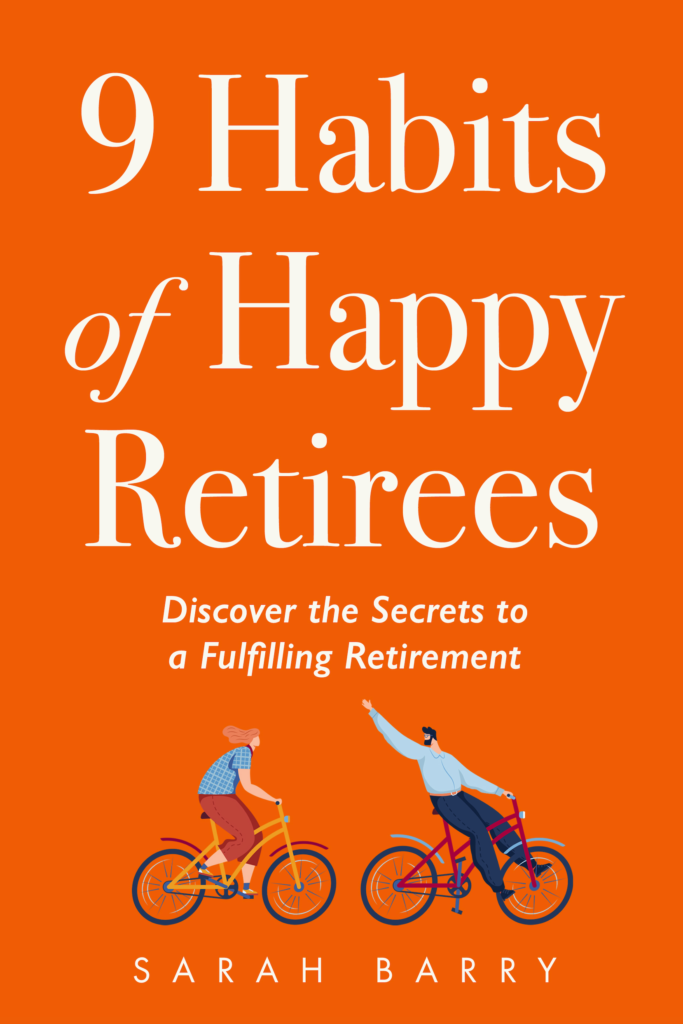
📙 9 Habits of Happy Retirees – Practical strategies for creating a fulfilling retirement beyond financial planning.
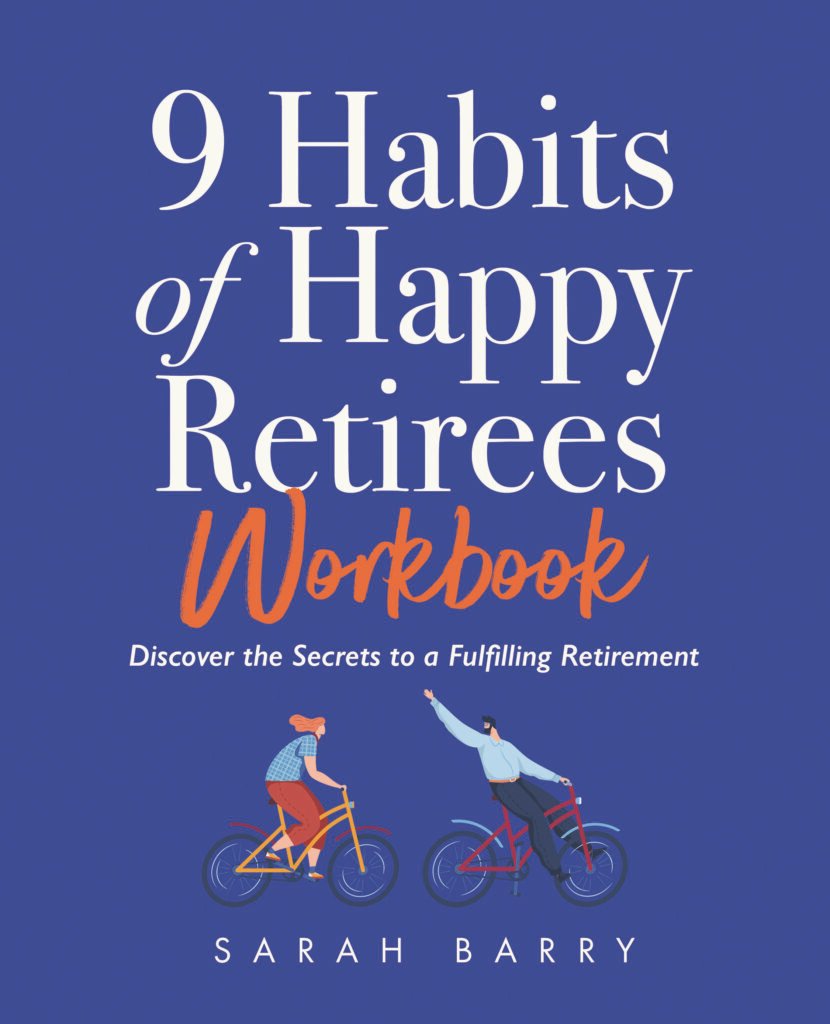
📘 The 9 Habits Workbook – Reflection exercises and planning tools to help you turn ideas into action.
Retirement
Re-defined
9 Habits of Happy Retirees helps you shape a lifestyle that goes beyond financial security—focusing on the everyday habits that support meaning and balance.
The Essential Workbook
Designed to complement the book, this workbook helps turn reflection into action—supporting your mental, emotional, and social wellbeing in retirement.
You don’t need a forever plan. You need thoughtful phases.
🌐 Visit www.sarahbarry.com or email hello@sarahbarry.com to explore coaching and resources for your next chapter.
