

When Your Experience No Longer Defines Your Future
For much of our working lives, experience is something we accumulate.
We build knowledge, develop skills, take on responsibilities, and gradually become known for what we do well.
Over time, our experience becomes a significant part of our professional identity.
People seek our advice because we’ve encountered similar situations before. We’re trusted to make decisions because we understand the consequences. We recognize problems that someone earlier in their career might not yet know how to anticipate.
After decades of working, that experience can feel like one of our greatest assets.
And it is.
But as we approach retirement or consider a different direction in later life, an interesting question emerges.
What happens when the experience that has defined us for so long is no longer the experience we want to use?
Perhaps you’ve spent 30 years leading teams, managing complex projects, or running a business. You’re good at what you do, and other people continue to value your expertise.
But you’re beginning to wonder whether you want to spend the next decade doing more of the same.
The challenge isn’t that you’ve lost your abilities.
It’s that your interests, priorities, and ambitions may be changing.
And sometimes, the hardest part of moving forward is giving ourselves permission to stop being the person everyone already knows.
The Weight of Being Good at Something
There’s a particular kind of security that comes from professional competence.
When you’ve spent years developing expertise, you know how to navigate difficult situations. You understand your industry, recognize familiar patterns, and have confidence in your judgment.
That confidence is hard-earned.
It’s also one of the reasons people often continue working in familiar roles long after they begin thinking about doing something different.
Being experienced feels comfortable.
Starting again, even in an area that genuinely interests us, can feel uncertain.
Imagine someone who has spent decades in a senior management position.
They’re accustomed to being the person who makes decisions, provides direction, and solves complicated problems.
Now they’re considering moving into an entirely different field.
They may have the financial freedom to explore it and the personal motivation to make the change.
But the prospect of becoming a beginner again feels uncomfortable.
They won’t have the same level of authority. They may need to ask basic questions, make mistakes, and accept that others know more than they do.
After years of being recognized for their expertise, that can feel like a significant loss.
Yet it’s worth considering whether we’re staying with something because we still enjoy it, or because we enjoy being good at it.
Those aren’t always the same thing.
When Other People Keep You in Your Old Role
Our professional identities aren’t created entirely by us.
They’re reinforced by the people around us.
Former colleagues remember us for particular skills. Friends introduce us through our careers. Professional contacts continue to approach us with opportunities that reflect what we’ve always done.
Even when we’re actively exploring something new, the world may continue to see us through the lens of our past experience.
This can create an unexpected tension.
You might be interested in coaching, teaching, writing, or developing a completely different business, but people continue to offer you consulting assignments in your former industry.
The opportunities may be attractive.
They may pay well, involve familiar people, and offer the reassurance of working in an environment where you know you can succeed.
Turning them down can feel irrational.
Why would you decline something you’re qualified to do, particularly when someone is willing to pay for your expertise?
But every opportunity comes with a cost beyond the hours it occupies.
It also uses attention and energy that could be directed toward something else.
Continuing to accept familiar work may be entirely appropriate if you still find it satisfying.
The difficulty arises when those commitments prevent you from exploring the direction you actually want to pursue.
Sometimes, moving forward requires accepting that being capable of doing something doesn’t mean you need to keep doing it.
Your Skills Are Transferable, Even When Your Role Isn't
One of the concerns people have about changing direction later in life is the fear that their previous experience won’t be relevant.
They may feel they’re starting from scratch.
But professional experience rarely consists of technical knowledge alone.
Over decades of working, we develop abilities that extend far beyond a particular job title.
We learn how to communicate, manage uncertainty, resolve disagreements, build trust, and make decisions with incomplete information.
We develop judgment, resilience, and an understanding of how people and organizations operate.
These capabilities don’t disappear when we leave a profession.
They can become valuable foundations for entirely different activities.
Someone who has spent years managing teams may discover that their ability to listen and support others is useful in mentoring.
A former business owner might bring practical experience to a community organization.
A person with a background in communications could apply those skills to writing, teaching, or advocating for a cause they care about.
The challenge is learning to recognize our abilities separately from the roles in which we developed them.
We often describe ourselves through job titles because they’re convenient.
But a title captures only a small part of what we’ve learned.
When we begin to identify the underlying capabilities we’ve developed, more possibilities become visible.
And we may discover that changing direction doesn’t require abandoning our experience.
It requires finding a different way to use it.
Making Peace With Being a Beginner Again
There’s something refreshing about learning a skill without already being expected to know the answers.
But it can also be uncomfortable.
After decades of professional achievement, we may have become accustomed to competence.
We’re used to understanding what we’re doing, knowing how to approach challenges, and being able to measure our progress.
Beginning something unfamiliar removes that certainty.
You might attend a class where everyone else seems more confident. You may try a new activity and discover that you’re not particularly good at it.
Perhaps you launch a small project and find yourself navigating challenges you never encountered in your previous career.
These experiences can be frustrating, especially when we compare our beginner abilities with the expertise we’ve developed elsewhere.
But that comparison isn’t particularly useful.
We didn’t become experienced professionals overnight.
Our confidence developed through years of learning, mistakes, practice, and adjustment.
The same process applies when we explore something new.
And there’s an important difference between learning in later life and learning at the beginning of a career.
We bring perspective.
We may be less concerned with proving ourselves, more comfortable asking questions, and better able to recognize which challenges are worth pursuing.
We can also choose to learn something simply because it interests us, without needing to turn it into another achievement.
Being a beginner doesn’t erase the experience we’ve accumulated.
It reminds us that we’re still capable of growing beyond it.
Deciding What to Carry Forward
Changing direction doesn’t mean rejecting everything that came before.
Our careers may have provided financial security, friendships, confidence, and opportunities that shaped who we are.
It’s entirely possible to appreciate those experiences while recognizing that we want something different now.
The more useful question may be which parts of our professional lives we want to carry forward.
Perhaps you still enjoy solving complex problems but no longer want responsibility for managing a large team.
Maybe you value working with people but have lost interest in the commercial pressures of your industry.
You might enjoy sharing your knowledge but prefer mentoring a few individuals rather than returning to a demanding leadership role.
These distinctions matter.
They allow us to move beyond the assumption that our choices are limited to continuing exactly as before or stopping completely.
There’s considerable space between those options.
You might work fewer hours, take on carefully selected projects, develop a new area of expertise, or contribute your experience in a different setting.
You may also decide that certain skills have served their purpose.
Just because you’ve spent years developing an ability doesn’t mean you’re obliged to keep using it.
Our experience belongs to us.
We get to decide what role it plays in the next stage of our lives.
Allowing Your Identity to Evolve
For people who have built successful careers, professional identity can be particularly difficult to loosen.
A career may have provided recognition, status, structure, and a clear answer to the question of what we do.
When that role changes, we may find ourselves wondering how to describe who we are.
This can feel especially uncomfortable during a transition, when we’re no longer fully identified with our previous role but haven’t yet established a new one.
We may be tempted to hold tightly to familiar descriptions because they offer certainty.
But identity doesn’t have to change overnight.
You can remain proud of your professional background while gradually making room for new interests and experiences.
You don’t need a new title immediately.
You don’t have to replace one impressive career with another equally impressive achievement.
And you don’t need to explain every decision to people who still see you through the lens of your former work.
Sometimes, a period of exploration is exactly what’s needed.
You may discover that you want to remain connected to your profession in a smaller capacity.
You might develop an interest that eventually becomes central to your life.
Or you may find satisfaction in having several different roles rather than one defining identity.
The important thing is allowing your sense of self to evolve alongside your priorities.
Final Thoughts
Experience is one of the great advantages of growing older.
It gives us knowledge, perspective, confidence, and abilities that can support us in countless ways.
But experience can also become restrictive if we begin to believe that our future must be an extension of our past.
The fact that we’ve spent decades doing something well doesn’t mean we have to continue doing it indefinitely.
We can value our careers without allowing them to determine every decision that follows.
We can carry forward the skills we enjoy using, step away from responsibilities that no longer suit us, and explore interests in which we’re complete beginners.
And we can accept that the person we’re becoming may have different ambitions from the person we’ve spent much of our lives being.
Perhaps one of the greatest opportunities in later life is recognizing that our experience gives us choices rather than obligations.
Your past can provide the foundation for what comes next without having to become the blueprint.
Not Sure Where to Start?
If you’re thinking about what comes next, my free Identity Audit is a practical place to begin. It helps you reflect on who you are beyond your professional role, what matters to you now, and what you might want from your next chapter.
Download the Free Identity Audit
If you’re ready to explore further, the What Comes Next: Getting Started package includes five guided worksheets to help you turn reflection into action, for just $37.
Planning in Chapters
If you prefer steady progress over rigid long-term plans, these resources can help:
📙 9 Habits of Happy Retirees – A practical guide to building a fulfilling next chapter, one habit at a time
📘 The 9 Habits Workbook – Reflection prompts and simple planning tools to support clarity and forward movement.
📘 The Golden Gap Year – A thoughtful approach to retirement as a transition to explore, not a single decision to make. experimentation, and discovery.
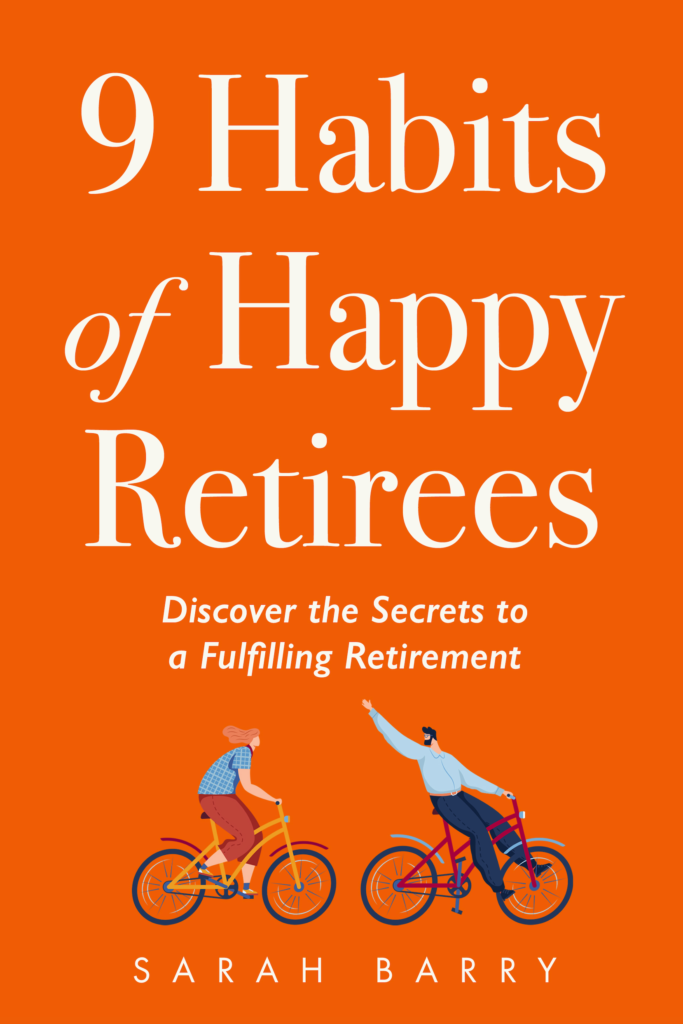
Retirement
Re-defined
9 Habits of Happy Retirees helps you shape a lifestyle that goes beyond financial security—focusing on the everyday habits that support meaning and balance.
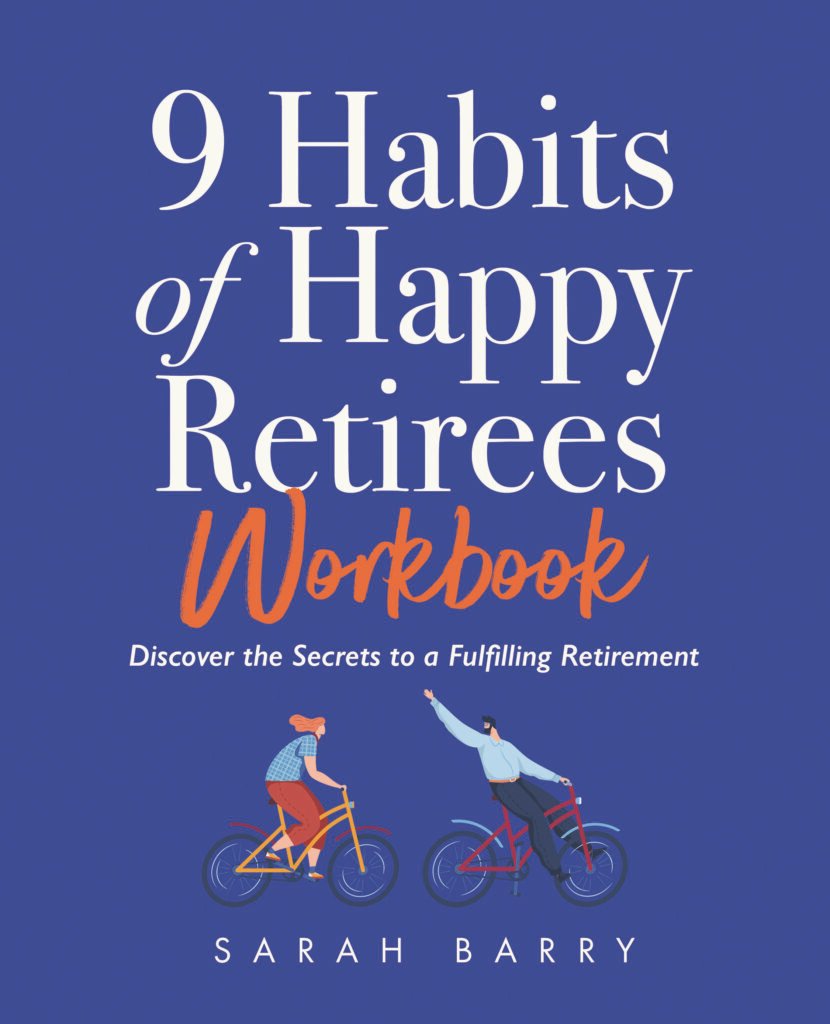
The Essential Workbook
Designed to complement the book, this workbook helps turn reflection into action—supporting your mental, emotional, and social wellbeing in retirement.
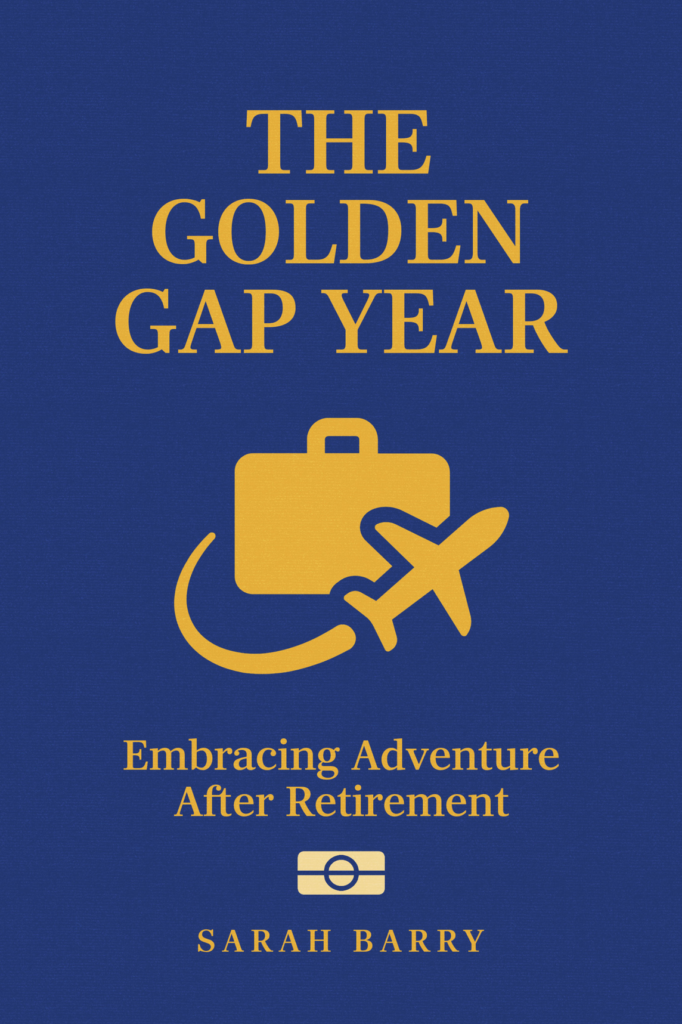
Adventure
Re-imagined
The Golden Gap Year invites you to approach retirement with curiosity and intention—creating space for new experiences and personal growth.
You don’t need a forever plan. You need thoughtful phases.
🌐 Visit www.sarahbarry.com or email hello@sarahbarry.com to explore coaching and resources for your next chapter.
