
You Don’t Need a Forever Plan
There is a particular kind of pressure that shows up during any life transition. People ask what you’re going to do next. You ask yourself the same thing. Even when the change is welcome, there is an expectation—sometimes spoken, often implied—that you should be able to explain where you’re heading.
What’s the plan?
We treat that question as responsible. We treat it as maturity. And in some areas of life, planning is absolutely useful. But the longer the time horizon gets, the less realistic “forever planning” becomes.
Long lives don’t require one perfect plan. They require a way of making good decisions over time.
The quiet problem with “forever thinking”
Many of us were raised on a simple idea: set the direction early, commit to it, and stay consistent. Choose a path, build a life around it, and aim for stability. That model worked reasonably well when careers were more linear, when retirement was shorter, and when life stages were more predictable.
But modern life is less scripted.
Careers zigzag. Families live across multiple places. Health changes. Aging parents need support. Children grow into their own lives. Technology changes how we work and connect. The cost of living shifts. Relationships evolve. Even our interests change as we get older and understand ourselves differently.
In that context, a forever plan is not only hard to create. It can be quietly misleading.
It suggests that the future is something you can define once, and then simply follow. It sets you up to believe that clarity should arrive early, and uncertainty means you’re behind.
It also creates a subtle trap: if you commit too strongly to one version of the future, you can end up clinging to it even when it no longer fits.
The truth is, most lives don’t unfold in a straight line. They unfold in seasons.
Why “forever plans” create unnecessary pressure
When people are in a transition—changing roles, leaving a long career, relocating, becoming an empty nester, starting over after a divorce, stepping into semi-retirement—there is often a desire to lock in a clear future quickly. It makes uncertainty feel manageable.
The trouble is that transitions are precisely the moments when clarity is least available.
You don’t yet have enough information. Your energy is still adjusting. Your routines are changing. Your priorities may be shifting without you fully noticing it. And because you’re in a different context, what you thought you wanted can start to change.
If you force a forever plan too early, it can create two problems.
First, it narrows your options. You begin filtering everything through a decision you made before you had the full picture. You may dismiss ideas that don’t match “the plan,” even if they would suit you now.
Second, it turns normal adjustment into self-doubt. When the plan starts to feel wrong (as many plans do over time), you may assume you made a mistake, rather than recognising that you’ve changed.
A forever plan treats change as a disruption. A more realistic approach treats change as part of the design.
Long horizons require adjustable thinking
One of the reasons this matters more now is that people are living longer, and working lives and later life stages are stretching. A single decision made at 55 can no longer reasonably be expected to hold perfectly at 75. Even if you have a strong sense of direction, the details will shift.
The same is true outside retirement.
In any long horizon—ten years, twenty years—there will be events you cannot predict. Some will be external: a job market change, a family need, an unexpected opportunity. Some will be internal: a shift in health, confidence, motivation, or priorities.
So instead of aiming for certainty, a more useful aim is adaptability.
Not in a chaotic way. In a grounded way. Adaptability that keeps you oriented, but not locked in.
You don’t need to decide the rest of your life. You need to decide what the next phase calls for.
A better alternative: the 5–10 year chapter
If “forever plan” thinking is heavy, what replaces it?
A simple, stabilising alternative is to think in chapters.
Not “I must design my entire future.”
But “What would be a good chapter from here?”
A 5–10 year chapter is long enough to create direction and momentum, and short enough to adjust without feeling like you’re starting over.
It also makes planning feel more humane.
You’re not trying to predict who you will be decades from now. You’re making a thoughtful best guess based on who you are today, and leaving room for reality to inform the next chapter.
A chapter approach also helps with one of the most common transition challenges: people either plan too vaguely (“I’ll just see what happens”) or too rigidly (“This is the exact plan for the next twenty years”). Chapters sit in the middle.
They give shape without demanding certainty.
What you can decide in a chapter
A chapter plan doesn’t need to be elaborate. It’s not a spreadsheet. It’s a set of decisions that create steadiness.
For example, you can decide:
- What you want your days to feel like most of the time (not in fantasy terms, in practical terms).
- What kind of rhythm supports your health and energy.
- What you want to protect (relationships, mobility, learning, rest).
- What you want to explore (interests, places, projects, contribution).
- What you want to reduce (overcommitment, unnecessary complexity, pressure).
You can also decide what you are not deciding yet.
That is often the most relieving part. A chapter approach allows you to say, “I don’t need to solve that now. I need to keep moving in a direction that makes sense.”
Stability without rigidity
Some people resist this idea because they associate chapters with instability. They worry that not having a forever plan means life becomes random.
In practice, it’s the opposite.
Chapters give you a stable approach to change. They allow you to be consistent in what matters, while being flexible in what doesn’t.
You can be consistent in your values. Consistent in the way you want to live. Consistent in the relationships and habits you protect.
You don’t have to be consistent in the exact shape of your calendar, or the exact label you put on your work, or the exact version of “what’s next.”
A forever plan often implies one fixed identity. A chapter approach allows you to evolve without treating evolution as failure.
How to use this in a transition
If you’re in a period of change, the question isn’t “What is my forever plan?”
A better question is:
What does the next chapter need?
That question invites realism.
It invites you to consider your current energy, your responsibilities, your appetite for change, your need for structure, your desire for contribution, and your capacity for risk.
It also gives you permission to plan without pretending you can predict everything.
You can build a chapter around:
- A new rhythm.
- A small number of commitments.
- A learning or health focus.
- A project with a defined start and end.
- A contribution that feels meaningful now.
And then you review.
Not every week. Not obsessively. But periodically.
Long lives benefit from check-ins, not declarations.
A steady conclusion
We often treat planning as an all-or-nothing skill. Either you have a clear plan for the future, or you’re drifting.
But there is a middle way.
You can have direction without locking yourself into a permanent blueprint. You can make thoughtful choices without demanding lifelong certainty. You can plan in chapters and still build a life that feels coherent.
In long lives, and in lives with real change, forever plans are often too rigid to be useful.
What works better is a steadier approach: make a good plan for the next chapter, live it long enough to learn from it, and adjust with confidence when life shifts.
That isn’t a lack of planning.
It’s a more realistic kind of planning.
Planning in Chapters
If you prefer steady progress over rigid long-term plans, these resources may help:
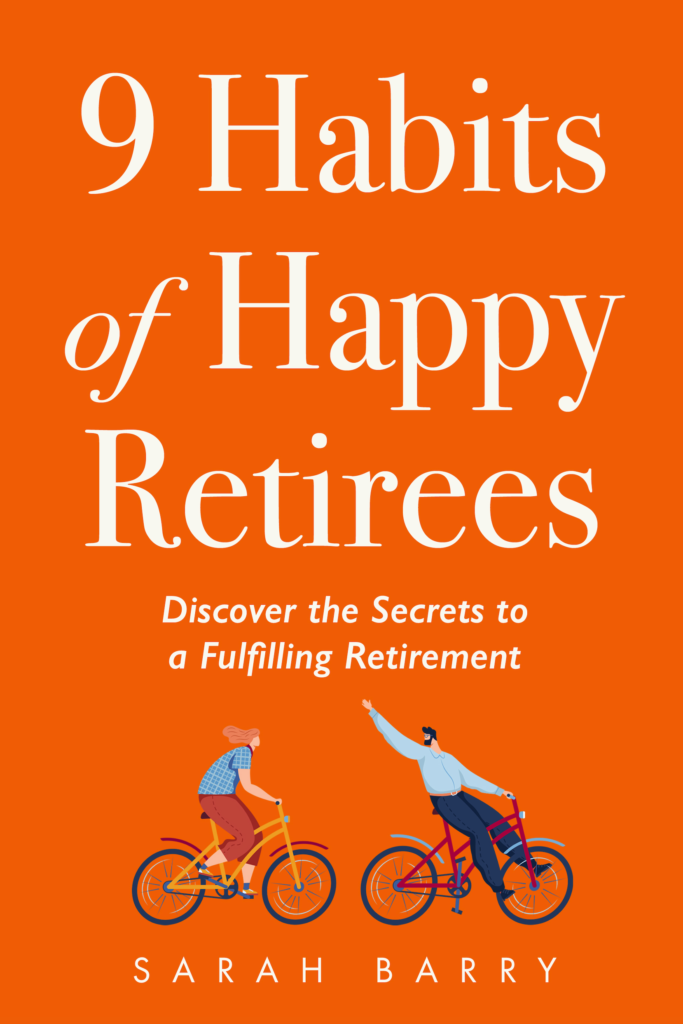
📘 9 Habits of Happy Retirees – Practical habits for building a purposeful next chapter.
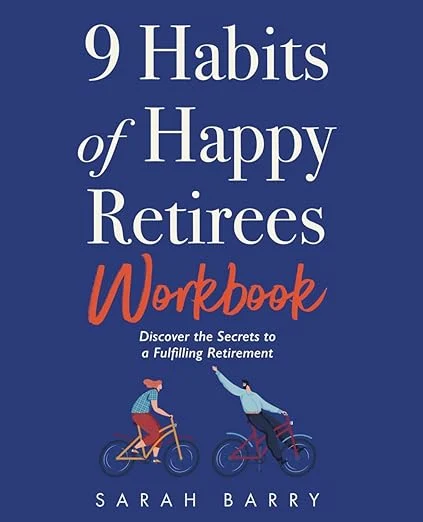
📗 The 9 Habits Workbook – Reflection prompts and planning templates to support gradual clarity.
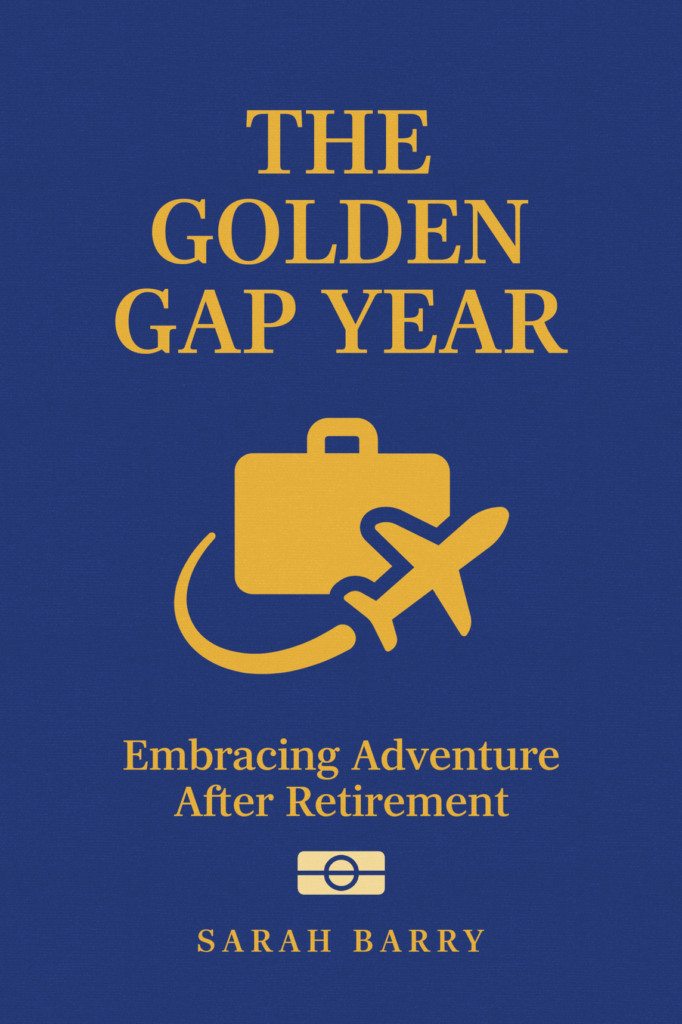
📙 The Golden Gap Year – A guide to approaching retirement as a structured transition, not a single decision.
Retirement Re-defined
“9 Habits of Happy Retirees” is your guidebook to crafting a retirement lifestyle that goes beyond financial security, focusing on the habits that lead to true happiness and contentment in your golden years.
The Essential Workbook
This workbook is designed to complement the book’s theoretical foundation, it offers a hands-on approach to improving your mental, emotional, and social well-being in retirement.
Adventure Re-imagined
A fresh take on post-retirement adventure. This inspiring new book invites you to reimagine your next chapter with purpose, joy, and the freedom to explore what truly lights you up. Your journey is just beginning.
You don’t need a forever plan. You need thoughtful phases.
🌐 Visit www.sarahbarry.com or email hello@sarahbarry.com for coaching and tools to support your next chapter.
