
The Hidden Grief of Retirement
When people think about retirement, they usually focus on the things they’re looking forward to.
More freedom. More flexibility. Less stress. More time for hobbies, travel, family, and all the things that work often make difficult.
What rarely gets discussed is that retirement can also involve loss.
Not necessarily a dramatic loss. Not the kind that attracts sympathy cards or casseroles from neighbors. In fact, the losses associated with retirement are often so subtle that many people don’t recognize them at all.
Instead, they find themselves feeling unsettled, emotional, irritable, restless, or unexpectedly flat.
And because retirement was something they chose, many feel guilty for having those feelings in the first place.
After all, isn’t this supposed to be the reward?
The problem isn’t that retirement is disappointing. The problem is that retirement often involves a form of grief that few people are prepared for.
The Losses Nobody Talks About
Most of us understand grief as a response to the loss of a person. But grief can arise whenever something important to us changes or disappears.
Work provides far more than a pay cheque.
It gives structure to our days. It creates routines. It offers opportunities for social interaction. It provides challenges to solve, goals to pursue, and a sense of progress. For many people, it also becomes closely connected to identity.
Without necessarily realizing it, we become accustomed to being the person who knows the answer, manages the team, solves the problem, or helps things move forward.
Then retirement arrives, and much of that disappears.
The calendar empties.
The phone rings less often.
The decisions become someone else’s responsibility.
The role you’ve spent decades inhabiting comes to an end.
Even when retirement is planned and welcomed, those changes can create a genuine sense of loss.
The challenge is that these losses often go unrecognized because society tends to view retirement as a positive milestone. When everyone around you assumes you should be enjoying yourself, it can feel difficult to admit that part of you is grieving what has been left behind.
When Gratitude and Grief Coexist
One of the biggest misconceptions about grief is that it only appears when something unwanted happens.
In reality, grief often accompanies positive transitions as well.
People experience it when they become parents, move to a new country, sell a family home, or start a long-awaited new chapter in life. The excitement of what’s ahead doesn’t automatically erase the sadness of what has ended.
Retirement is no different.
You can feel grateful for your freedom and still miss your colleagues.
You can enjoy having more control over your time and still miss the structure that work provided.
You can be excited about the future and still feel sad about closing a chapter that was important to you.
These emotions are not contradictory.
They are part of being human.
The problem arises when people assume they should only be feeling the positive emotions. The more we resist or dismiss feelings of loss, the more confusing and persistent they often become.
Sometimes the most helpful thing we can do is simply acknowledge what has changed.
The Loss of Identity
For many people, the most significant loss is not the job itself. It’s the identity attached to it.
For decades, work has provided an answer to one of the most common questions we get asked:
“What do you do?”
The answer may have reflected years of experience, expertise, achievement, and commitment. It provided a sense of place in the world and a clear understanding of how you contributed.
Retirement removes that identity almost overnight.
The skills remain. The experience remains. The person remains.
But the role disappears.
This can create a surprising sense of disorientation, particularly for people who enjoyed their work or invested heavily in their careers.
Many retirees describe feeling invisible in ways they never expected. Others struggle to explain who they are without referring to what they used to do.
This isn’t vanity or self-importance.
It’s a natural response to a major identity shift.
Part of the retirement transition involves gradually building a broader sense of self, one that extends beyond a job title or profession.
That process takes time.
Missing More Than the Work
People often assume they’ll miss the work itself.
Sometimes they do.
More often, they miss the things surrounding the work.
The daily conversations.
The sense of belonging.
The shared goals.
The feeling of being needed.
The small interactions that gave shape and meaning to ordinary days.
Many workplace relationships exist within a structure that makes connection effortless. You see people regularly. You share experiences. You have reasons to interact.
Retirement removes much of that structure.
Maintaining friendships and social connections suddenly requires greater intention.
For some people, this can be one of the most surprising aspects of retirement. They expected to miss the job. They didn’t expect to miss the community that came with it.
Why Recognizing the Loss Matters
When people don’t recognize these experiences as forms of grief, they often assume something is wrong.
They tell themselves they should be happier.
They wonder why retirement doesn’t feel quite as fulfilling as they imagined.
They worry they’re failing to adjust.
In reality, they may simply be processing change.
Recognizing loss doesn’t make retirement negative.
It makes retirement real.
It helps you understand your emotions in the context of a significant life transition rather than seeing them as evidence that you’ve made a mistake.
Acknowledgment creates space for adaptation.
When you recognize what you’ve lost, you can begin to think about what might replace it.
Not in exactly the same form, but in a way that fits this new stage of life.
Looking Forward Without Rushing
One of the challenges with grief is that we often want to move through it as quickly as possible.
We look for solutions, distractions, or ways to avoid uncomfortable emotions.
But transitions rarely work on a fixed timeline.
Some aspects of retirement settle quickly. Others take years.
The goal isn’t to recreate your working life in retirement.
Nor is it to erase the significance of what came before.
The goal is to honor the chapter that has ended while remaining open to the chapter that is beginning.
That requires patience.
It requires curiosity.
And sometimes it requires allowing yourself to feel a sense of loss without immediately trying to fix it.
Final Thoughts
Retirement is often presented as a financial transition, but for many people it is equally an emotional one.
Alongside the freedom and opportunities can come the loss of routines, relationships, identity, status, and familiarity. These losses are real, even when retirement itself is welcome.
Recognizing them doesn’t mean you’re ungrateful.
It doesn’t mean you’ve made the wrong decision.
And it certainly doesn’t mean you’re failing at retirement.
It simply means you’re human.
The hidden grief of retirement isn’t something to overcome as quickly as possible.
It’s something to acknowledge, understand, and move through.
Because sometimes the first step towards building a meaningful next chapter is recognizing what you’ve left behind.
Continue Exploring
If you’re exploring what this next chapter could look like and want practical ways to create direction, structure, and meaning, you’ll find further guidance in my books 9 Habits of Happy Retirees and The Golden Gap Year, along with additional resources at SarahBarry.com.
📙 9 Habits of Happy Retirees – Practical strategies for creating a fulfilling retirement beyond financial planning.
📘 The 9 Habits Workbook – Reflection exercises and planning tools to help you turn ideas into action.
📘 The Golden Gap Year – A fresh approach to retirement as a period of exploration, experimentation, and discovery.
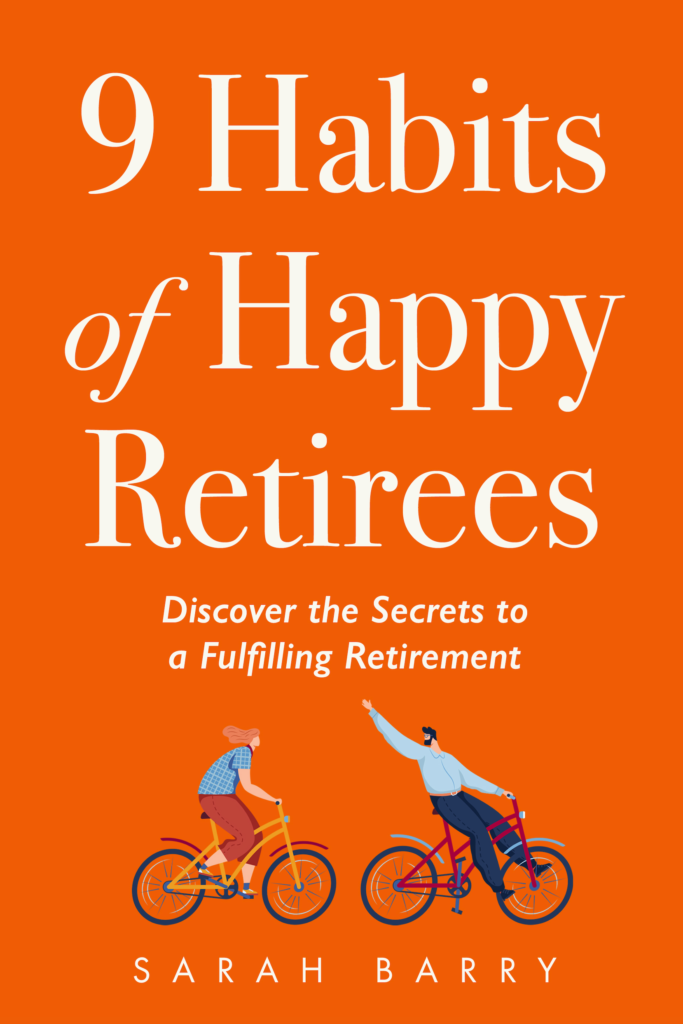
Retirement
Re-defined
9 Habits of Happy Retirees helps you shape a lifestyle that goes beyond financial security—focusing on the everyday habits that support meaning and balance.
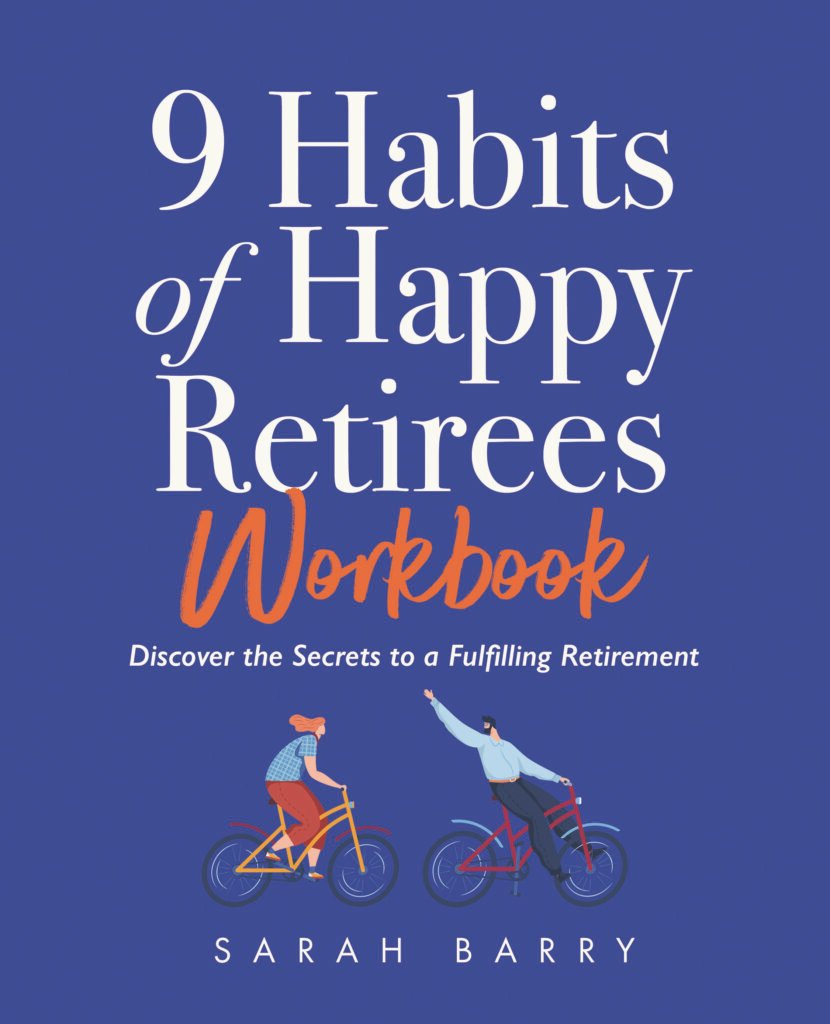
The Essential Workbook
Designed to complement the book, this workbook helps turn reflection into action—supporting your mental, emotional, and social wellbeing in retirement.
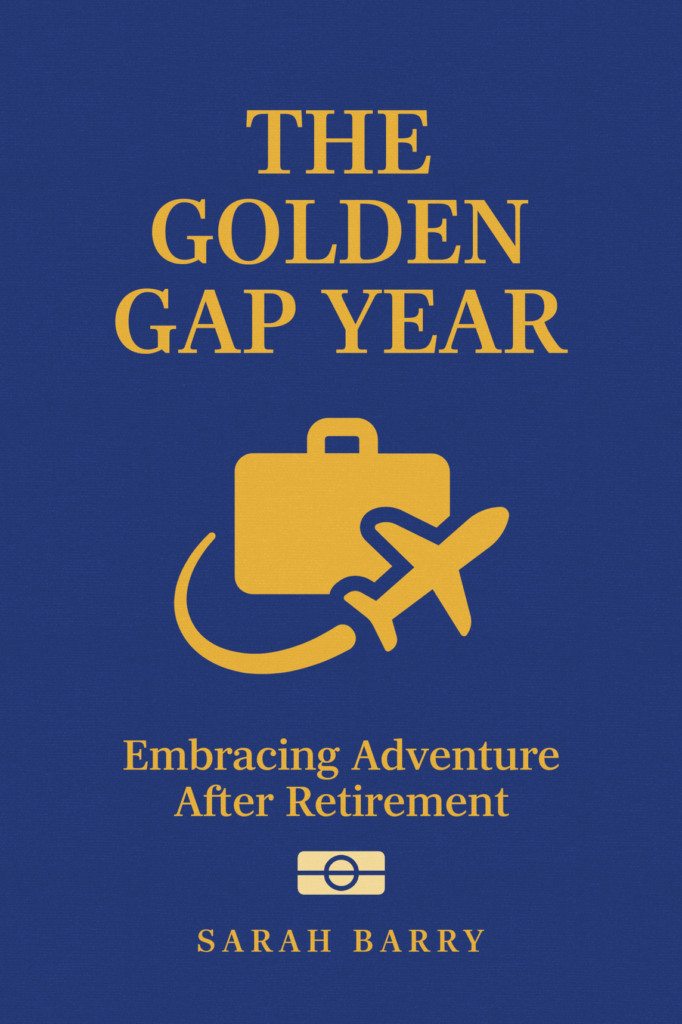
Adventure
Re-imagined
The Golden Gap Year invites you to approach retirement with curiosity and intention—creating space for new experiences and personal growth.
You don’t need a forever plan. You need thoughtful phases.
🌐 Visit www.sarahbarry.com or email hello@sarahbarry.com to explore coaching and resources for your next chapter.
