
Redefining What It Means to Be Useful
One of the quietest losses in retirement is the loss of being needed.
During our working lives, our usefulness is rarely in doubt. People rely on us. They ask for our opinion, our expertise, our judgment, and our time. We solve problems, make decisions, support colleagues, and contribute to outcomes that matter. Even on difficult days, there is usually some evidence that our efforts have value.
Because this happens gradually over decades, we rarely stop to think about it. Being useful becomes part of the background of everyday life.
Then retirement changes the picture.
The emails slow down. The meetings stop. Decisions are made without us. Problems are solved by someone else. While this can bring a welcome sense of freedom, it can also create an unexpected question that many people struggle to articulate:
Where does my sense of value come from now?
When Usefulness Has Been Defined for You
Most careers provide a clear framework for usefulness. We know what is expected of us and how our contribution fits into something larger. Whether we’re managing people, serving customers, raising a family, running a business, or supporting a team, there are visible ways to see that our efforts matter.
This creates a powerful feedback loop. We receive recognition, appreciation, responsibility, and opportunities because of the value we provide. Over time, usefulness becomes intertwined with identity.
Without realizing it, many of us begin to answer questions about who we are through the lens of what we contribute. We become the person people turn to for advice, leadership, expertise, organization, or support. Our role in the lives of others becomes part of how we understand ourselves.
Retirement removes much of that structure. Not because our skills disappear or our experience becomes irrelevant, but because the systems that once reinforced our usefulness are no longer part of everyday life.
The shift can feel surprisingly significant.
The Subtle Loss of Being Needed
One of the less discussed aspects of retirement is that the experience of being needed often changes.
In working life, there are usually people waiting for your input. Someone needs an answer, a decision, a recommendation, or a solution. Your contribution is visible and immediate.
Retirement is different.
For the first time in many years, there may be fewer demands on your time and fewer people relying on your expertise. While this can feel liberating, it can also leave an unexpected gap.
Many retirees describe feeling less relevant, even when they remain active and engaged. Others find themselves missing the simple satisfaction that came from knowing their efforts made a difference.
This isn’t necessarily about status or importance. It’s about significance. Human beings generally want to feel that they matter, that their presence has value, and that they contribute in some meaningful way to the world around them.
When the old ways of demonstrating that value disappear, it is natural to wonder where it comes from now.
Why Busyness Often Follows
One reason many retirees fill their calendars so quickly is that activity can feel like a substitute for usefulness.
If being useful once meant being busy, then staying busy can feel reassuring. It provides structure, momentum, and a sense of purpose. There is always something to do, somewhere to go, or another project to complete.
The problem is that busyness and usefulness are not the same thing.
A person can be extremely busy while feeling disconnected from what matters most. Equally, someone can make a meaningful contribution without filling every hour of the day.
This is one of the important distinctions retirement invites us to explore. The goal is not simply to replace work with other forms of activity. The goal is to discover what contribution means when it is no longer driven by obligation or expectation.
A Different Kind of Contribution
One of the opportunities retirement creates is the freedom to contribute by choice rather than necessity.
Throughout our careers, much of our contribution is shaped by responsibilities. We show up because people depend on us and because our roles require it. Retirement creates space to decide where and how we want to direct our energy.
For some people, that may involve mentoring, volunteering, or supporting community organisations. For others, it may mean helping family members, sharing knowledge, pursuing creative projects, or simply being available to those they care about.
Often these contributions are quieter than the ones that came before.
They may not generate promotions, recognition, or measurable outcomes. They may never appear on a performance review or be acknowledged publicly.
Yet they can still be deeply meaningful.
In some cases, they are more meaningful precisely because they are chosen rather than required.
The Value of Presence
Perhaps one of the biggest shifts is recognizing that usefulness is not always about doing.
Sometimes it is about being.
Being present for a friend who is struggling, being available to support a partner. Being a source of encouragement, wisdom, or perspective. And Being someone who listens without rushing to solve the problem.
These contributions are easy to overlook because they don’t fit traditional ideas of productivity. They don’t create visible results, and they are difficult to measure.
Yet they often have a profound impact.
As we move through life, there is growing value in qualities such as patience, empathy, perspective, and experience. These may not attract the same attention as professional achievements, but they can enrich the lives of those around us in ways that matter deeply.
Redefining Usefulness on Your Own Terms
One of the gifts of retirement is the opportunity to decide for yourself what usefulness means.
For decades, that definition may have been shaped by employers, organizations, responsibilities, and expectations. Retirement allows you to step back and ask a different question.
Not, “What am I expected to contribute?”
But, “What do I want to contribute?”
The answer will look different for everyone. Some people will continue working. Others will volunteer, create, teach, mentor, travel, or focus on relationships. There is no single correct approach.
What matters is that the contribution feels authentic and aligned with the life you want to build.
The challenge is not replacing your previous role.
It is discovering new ways to express your value.
Final Thoughts
Retirement is not a transition from being useful to being irrelevant.
It is a transition from externally defined usefulness to self-defined contribution.
The systems that once measured your value may no longer be present, but that does not mean your value has disappeared. Your experience, wisdom, relationships, and ability to contribute remain very much intact.
The challenge is not finding ways to prove your worth.
It is recognizing that your worth was never limited to your job in the first place.
Continue Exploring
If you’re exploring what this next chapter could look like and want practical ways to create direction, structure, and meaning, you’ll find further guidance in my books 9 Habits of Happy Retirees and The Golden Gap Year, along with additional resources at SarahBarry.com.
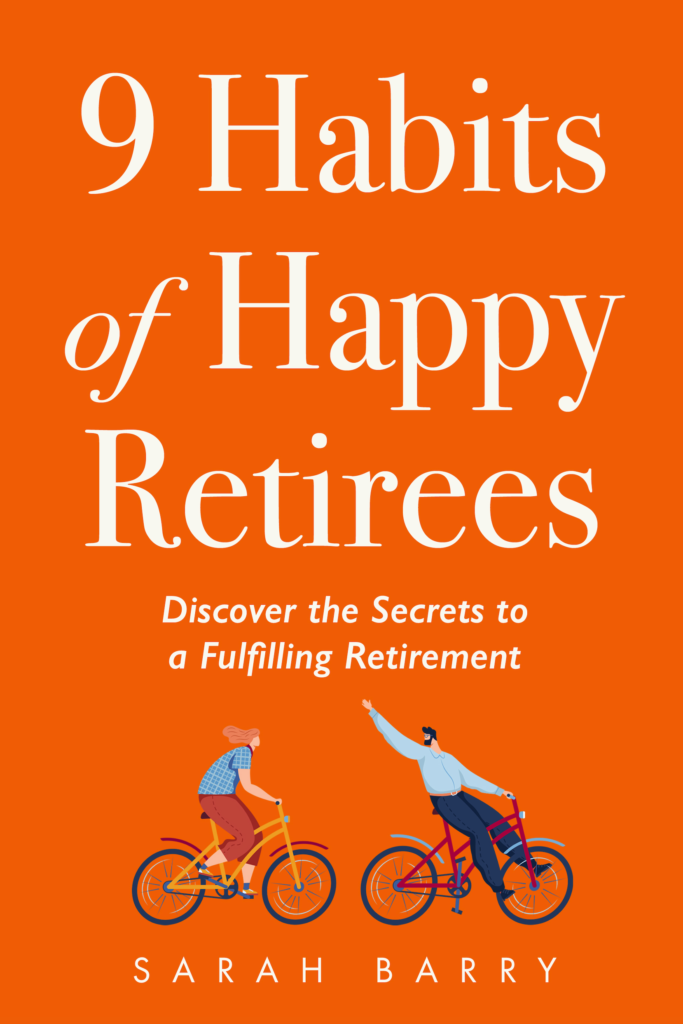
📙 9 Habits of Happy Retirees – Practical strategies for creating a fulfilling retirement beyond financial planning.
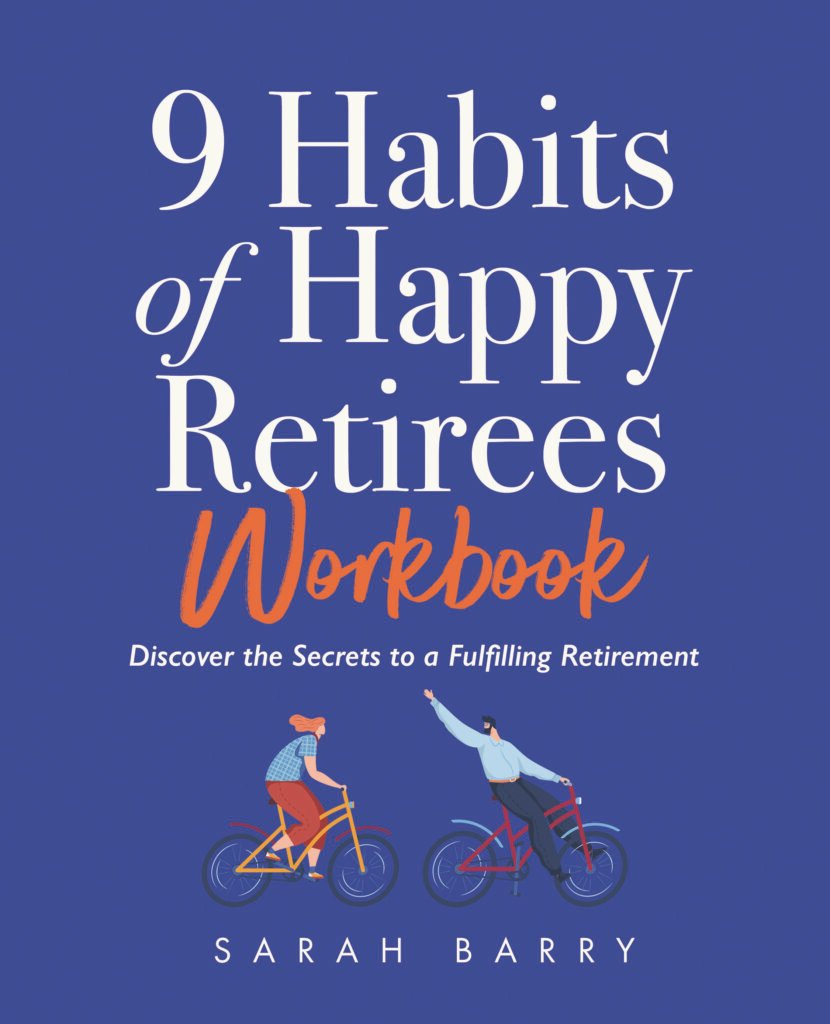
📘 The 9 Habits Workbook – Reflection exercises and planning tools to help you turn ideas into action.
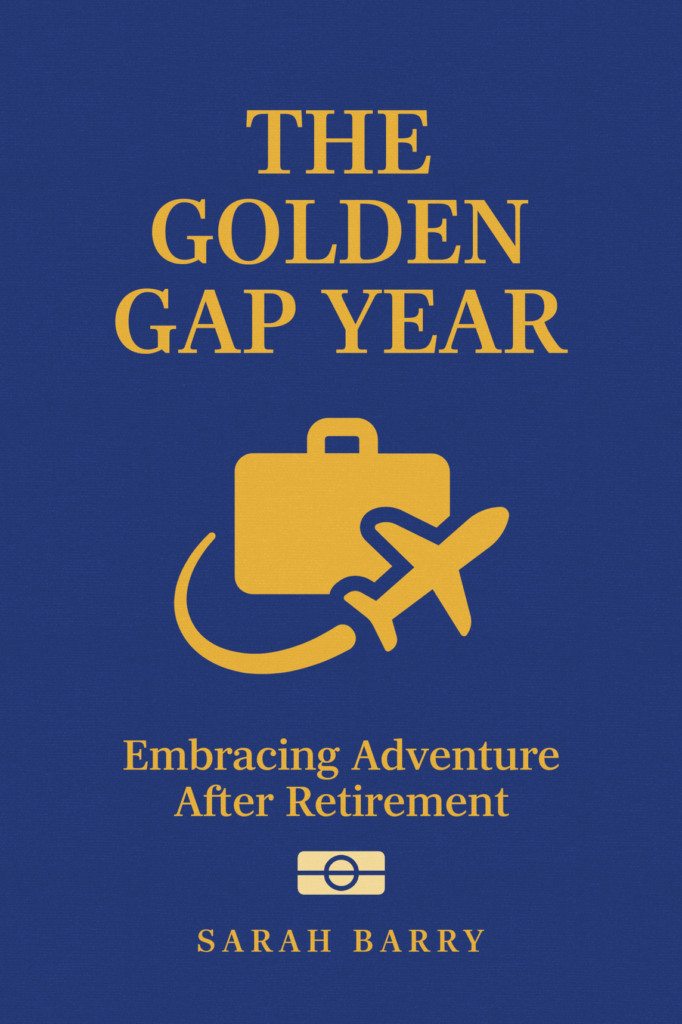
📘 The Golden Gap Year – A fresh approach to retirement as a period of exploration, experimentation, and discovery.
Retirement
Re-defined
9 Habits of Happy Retirees helps you shape a lifestyle that goes beyond financial security—focusing on the everyday habits that support meaning and balance.
The Essential Workbook
Designed to complement the book, this workbook helps turn reflection into action—supporting your mental, emotional, and social wellbeing in retirement.
Adventure
Re-imagined
The Golden Gap Year invites you to approach retirement with curiosity and intention—creating space for new experiences and personal growth.
You don’t need a forever plan. You need thoughtful phases.
🌐 Visit www.sarahbarry.com or email hello@sarahbarry.com to explore coaching and resources for your next chapter.
