

The Strange Feeling of Not Earning Anymore
The first month it happens, many people check their bank account anyway.
Not because they’re worried. The pension has arrived, the investments are doing what they were designed to do, or there is more than enough put aside to support the retirement they carefully planned. Financially, nothing is wrong.
It’s simply that, for the first time in decades, the salary isn’t there.
The regular payment that appeared every month, often without much thought, has quietly disappeared. No notification, No payslip, No confirmation that another month of work has been completed and rewarded.
For some people, the moment passes unnoticed.
For others, it feels strangely significant.
The feeling can be difficult to explain because it has very little to do with money. The account balance may be exactly as expected. Bills can still be paid. Life carries on.
And yet something feels different.
What many retirees discover is that a paycheck represented far more than income. Over the years, it became a quiet symbol of contribution, capability, responsibility, and purpose. It was tangible evidence that someone valued what you brought to the table. Month after month, year after year, it arrived as a reminder that your work mattered.
When it stops, even by choice, it can feel as though something else has stopped with it.
More Than a Number
Most of us think of a salary as a financial transaction. We exchange our time, knowledge, and effort for income. On the surface, it is a simple arrangement.
In reality, the relationship is much more complicated.
A career provides countless forms of validation that have nothing to do with the amount on a payslip. Colleagues ask for your advice. Clients trust your judgement. Teams rely on your leadership. Problems arrive on your desk because people believe you can solve them. The salary becomes the visible expression of something much larger. It reflects years of experience, accumulated knowledge, and the value others place on your contribution.
Because this happens gradually over a lifetime, we rarely notice how deeply it shapes us.
The monthly payment simply becomes part of the rhythm of life.
Only when it disappears do some people realise how much meaning they had attached to it.
The Emotional Shift That Few People Expect
Retirement planning is understandably dominated by financial conversations.
Will there be enough?
How should savings be invested?
What income will be needed?
These are important questions, and good planning provides enormous peace of mind.
What receives far less attention is what happens emotionally when earning stops.
Two people can retire with identical financial security and have completely different experiences. One barely notices the absence of a salary. Another feels unexpectedly unsettled, despite knowing they no longer need it.
This isn’t irrational.
It is the result of spending decades in a world where earning and contributing were closely connected. Throughout our careers, income becomes one of the many ways we measure progress. It isn’t the only measure, nor necessarily the most important one, but it is visible, regular, and easy to understand.
Retirement quietly removes that marker.
The question that follows is rarely about money.
It is about value.
Learning to Measure Different Things
One of the hidden tasks of retirement is learning to measure life differently.
During our careers, success is often visible. Projects are completed. Promotions are earned. Goals are achieved. Salaries increase. Progress can usually be tracked in some tangible way.
Retirement asks us to let go of many of those familiar measures.
That doesn’t mean contribution ends. It means contribution becomes harder to quantify.
A conversation with a grandchild will never appear on a performance review.
Helping a neighbour through a difficult time will not generate a bonus.
Sharing decades of experience with someone starting their own career will not result in a promotion.
Yet these moments may matter just as much as anything that once appeared on a payslip.
Perhaps more.
This is one of the great adjustments of retirement. It requires shifting attention from what can be measured to what can be experienced. The value of a day is no longer found in what it earned, but in how it was lived.
That change rarely happens overnight.
A Different Kind of Wealth
The word “wealth” usually leads us towards financial thinking.
Retirement has a way of broadening the definition.
Time becomes a form of wealth.
Health becomes a form of wealth.
Strong relationships become a form of wealth.
The freedom to decide how you spend a Tuesday morning becomes a form of wealth.
None of these appear in a bank account, yet they often become far more important than another monthly payment ever was.
This doesn’t diminish the value of financial security. On the contrary, financial planning creates the freedom to focus on these other forms of wealth. But once the practical side has been addressed, retirement invites a deeper question.
If money is no longer the primary measure of value, what is?
For many people, the answer evolves slowly.
It is found in meaningful relationships, curiosity, generosity, creativity, learning, contribution, and the quiet satisfaction of living in ways that feel aligned with who they have become.
These are not things that arrive on a payslip.
They are things that accumulate through the way we choose to live.
Final Thoughts
The first missing paycheck can feel surprisingly emotional.
Not because of what it allows you to buy, but because of what it quietly represented for so many years.
If that moment feels significant, it doesn’t mean you have made the wrong decision about retirement. Nor does it mean you are more attached to money than you realised.
It may simply mean that you are adjusting to a new way of understanding your own value.
For decades, part of that value arrived as a number in your bank account every month.
Retirement invites you to discover that your worth was never contained in that number.
It was always something much bigger.
Continue Exploring
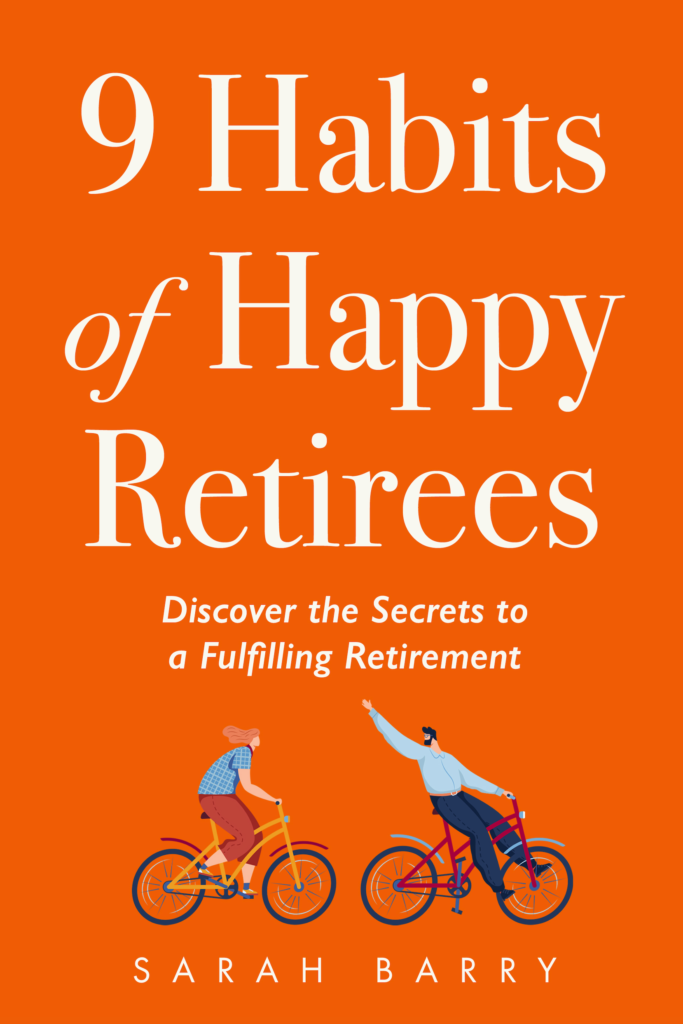
If you’re exploring what this next chapter could look like and want practical ways to create direction, structure, and meaning, you’ll find further guidance in my books 9 Habits of Happy Retirees and The Golden Gap Year, along with additional resources at SarahBarry.com.
📙 9 Habits of Happy Retirees – Practical strategies for creating a fulfilling retirement beyond financial planning.
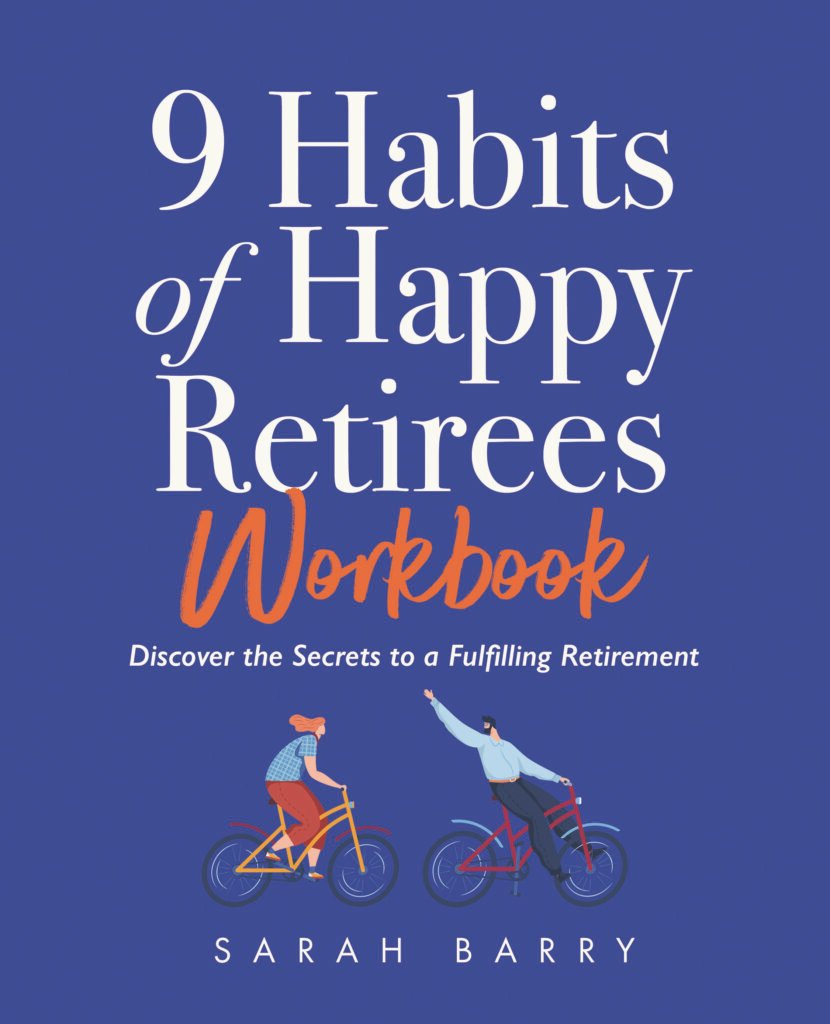
📘 The 9 Habits Workbook – Reflection exercises and planning tools to help you turn ideas into action.
Retirement
Re-defined
9 Habits of Happy Retirees helps you shape a lifestyle that goes beyond financial security—focusing on the everyday habits that support meaning and balance.
The Essential Workbook
Designed to complement the book, this workbook helps turn reflection into action—supporting your mental, emotional, and social wellbeing in retirement.
You don’t need a forever plan. You need thoughtful phases.
🌐 Visit www.sarahbarry.com or email hello@sarahbarry.com to explore coaching and resources for your next chapter.
