

What Do You Say When Someone Asks What You Do?
It is one of the shortest questions we ask each other.
“So, what do you do?”
Most of the time, it is little more than polite conversation. We ask it at dinner parties, on flights, while waiting for appointments, or when meeting someone for the first time. Rarely do we stop to consider how much weight those six words carry.
For much of adult life, the answer comes easily.
“I’m an engineer.”
“I run my own business.”
“I’m a teacher.”
“I’m a lawyer.”
A job title does far more work than we realise. In a single sentence, it explains how we spend our days, hints at our interests and expertise, and gives the other person somewhere to begin the conversation. We become so accustomed to answering the question that it feels almost automatic.
Then retirement arrives.
The next time someone asks what you do, there is often the briefest of pauses. It may last only a second, but for many retirees it feels much longer. The answer that served them for decades no longer feels quite right, yet the new one has not fully formed.
It is a surprisingly small moment.
It can also be a surprisingly significant one.
The Question Behind the Question
When someone asks what you do, they are rarely conducting an employment survey.
More often, they are trying to understand something about you.
Work has become one of society’s great shortcuts. It tells people where we have invested our time, the knowledge we have accumulated, and the communities we have belonged to. Careers have become such a dominant part of modern life that a profession is often treated as a reasonable summary of a person.
Retirement quietly disrupts that convention.
The old answer suddenly belongs to the past. Many people instinctively reply, “I used to be…” before catching themselves. Others simply say, “I’m retired,” only to find the conversation comes to an unexpected halt.
Neither response is wrong.
They simply reveal how much of our identity has been wrapped up in a role that no longer exists.
This is one of the reasons retirement can feel disorienting, even for people who were looking forward to it. Losing a job title is not simply about leaving work. It is about losing a familiar way of introducing yourself to the world.
Between the Past and the Future
There is often an awkward period in retirement where neither the old identity nor the new one feels entirely comfortable.
Some people cling tightly to the past. Every introduction begins with what they used to do, as though retirement is merely an interruption to a career that still defines them. Others move in the opposite direction, avoiding the subject altogether because they are uncertain how to explain this stage of life.
Neither approach is unusual.
Both are signs that identity is still adjusting.
The difficulty is that retirement does not hand you a new description of yourself. Unlike a promotion or a career change, there is no replacement title waiting at the end. Instead, there is a period where the answer becomes less obvious, and perhaps more interesting.
For the first time in decades, the question is no longer answered by your employer.
It is answered by you.
A Different Kind of Introduction
One of the quieter shifts in retirement is moving away from defining yourself by occupation and towards describing yourself through interests, relationships, and contribution.
That does not happen immediately.
Many people initially feel as though they need another title to replace the one they have lost. They search for a new label that sounds equally impressive or equally clear.
Yet the most engaging conversations rarely begin with titles.
They begin with enthusiasm.
Someone who says they spend their time mentoring young entrepreneurs, restoring old furniture, learning Italian, volunteering at a local charity, walking every morning, or travelling with their partner tells us something far richer than a job title ever could.
These are not carefully crafted personal brands.
They are glimpses into a life.
Retirement offers the opportunity to introduce yourself in a way that reflects who you are becoming rather than simply what you once did.
That can feel unfamiliar at first because most of us have spent decades believing that our profession is the most interesting thing about us.
Often, it isn’t.
Letting the Answer Evolve
Perhaps the most reassuring thing about this question is that it does not need to have a perfect answer.
Many retirees worry that they should have a clear new identity as soon as work ends. They expect to replace one sentence with another and carry on as before.
Life is rarely that tidy.
The answer changes as retirement unfolds.
The person who initially says, “I’ve just retired,” may, a year later, describe a life filled with volunteering, photography, grandchildren, hiking, community projects, or learning something entirely new. None of those things may have been planned on the day they left work.
They emerged through living rather than planning.
That is one of the freedoms retirement offers.
You no longer have to define yourself by a single role.
You can allow your identity to become broader, richer, and more difficult to summarise in a single sentence.
Perhaps that is not something to resist.
Perhaps it is something to enjoy.
Final Thoughts
The next time someone asks what you do, you may still hesitate.
That pause does not mean you have lost your identity.
It may simply mean that your identity is no longer contained within a job title.
For much of your life, work answered the question on your behalf. Retirement gives you the opportunity to answer it differently. Not by searching for another title, but by reflecting on what genuinely occupies your time, your attention, and your curiosity.
In the end, the most interesting answer is rarely about what you did for a living.
It is about how you are choosing to live now.
Continue Exploring
If you’re exploring what this next chapter could look like and want practical ways to create direction, structure, and meaning, you’ll find further guidance in my books 9 Habits of Happy Retirees and The Golden Gap Year, along with additional resources at SarahBarry.com.
📙 9 Habits of Happy Retirees – Practical strategies for creating a fulfilling retirement beyond financial planning.
📘 The 9 Habits Workbook – Reflection exercises and planning tools to help you turn ideas into action.
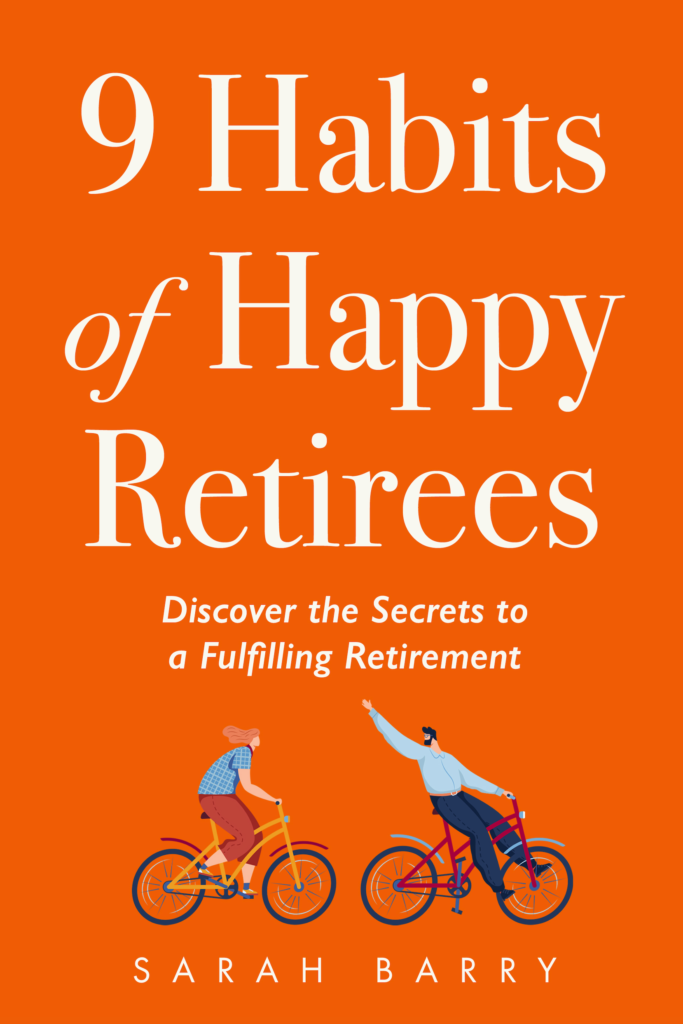
Retirement
Re-defined
9 Habits of Happy Retirees helps you shape a lifestyle that goes beyond financial security—focusing on the everyday habits that support meaning and balance.
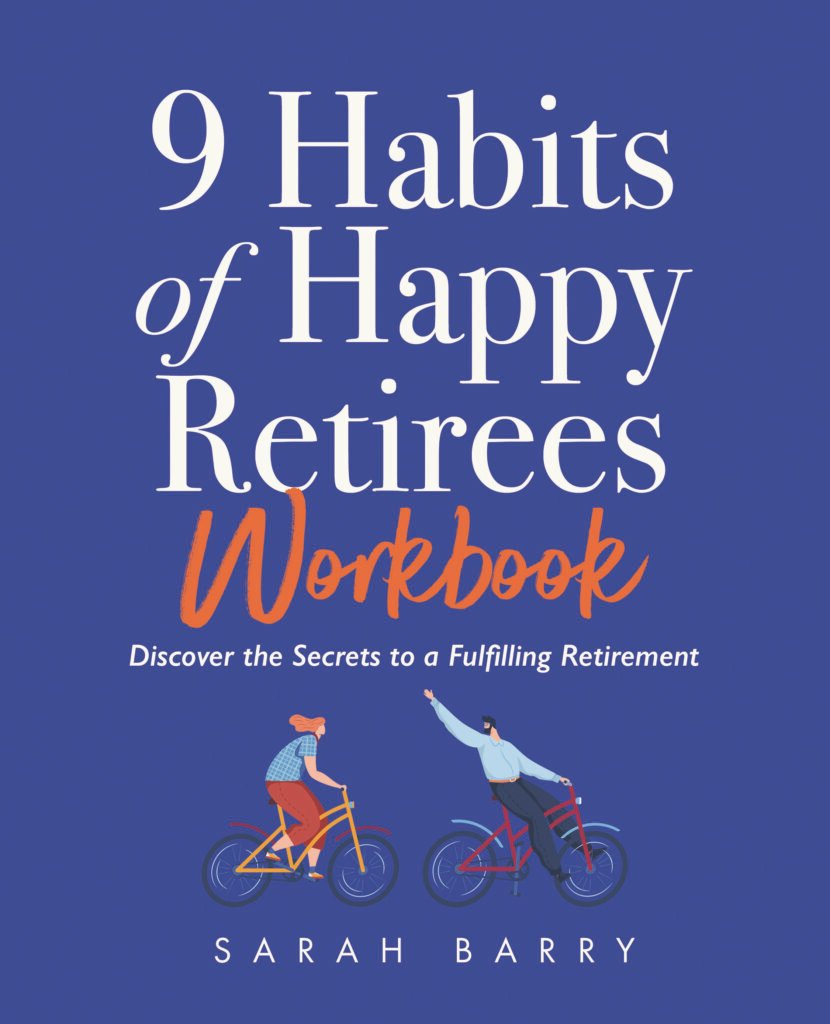
The Essential Workbook
Designed to complement the book, this workbook helps turn reflection into action—supporting your mental, emotional, and social wellbeing in retirement.
You don’t need a forever plan. You need thoughtful phases.
🌐 Visit www.sarahbarry.com or email hello@sarahbarry.com to explore coaching and resources for your next chapter.
