

Everyone Has an Opinion About Your Retirement
The moment people hear you’re retiring, the advice begins.
“You’ll finally have time to travel.”
“Don’t sit around. Keep busy.”
“You’ll be looking after the grandchildren now.”
“You should move somewhere warmer.”
“You’ll probably get bored after six months.”
Most of these comments are offered with kindness. Friends and family are usually trying to be helpful. They want to celebrate a milestone, offer encouragement, or share what worked for them. Yet beneath the good intentions lies something many retirees are unprepared for.
The moment you leave work, other people begin imagining what your retirement should look like.
Some see it as a reward for decades of hard work. Others see it as an opportunity for adventure, family, volunteering, or even another career. Before long, retirement can begin to feel less like an open chapter and more like a collection of expectations handed to you by everyone else.
The difficulty is that many of those expectations have very little to do with you.
They are reflections of other people’s lives, values, and unfinished ambitions.
Other People's Retirement Stories
Retirement has become one of those life stages that everyone seems to have an opinion about, whether they have experienced it or not.
People who are still working often describe the retirement they dream of having one day. Those already retired may explain what they believe everyone should do. Family members naturally hope retirement will create more time together. Friends imagine travelling companions, golfing partners, or someone finally available for weekday lunches.
None of these expectations are unreasonable.
The challenge begins when they accumulate.
Without realising it, retirees can find themselves trying to satisfy several different versions of retirement at once. One person expects them to slow down and relax. Another thinks they should remain productive. Someone else assumes they will become the reliable grandparent, volunteer, or caregiver.
Each suggestion may sound harmless on its own.
Together, they can become surprisingly noisy.
It is easy to lose sight of a simple truth.
Retirement belongs to the person living it.
The Pressure to Perform a "Good" Retirement
Work comes with visible measures of success. Retirement does not.
That uncertainty creates an interesting dynamic. In the absence of clear benchmarks, many people begin measuring themselves against the expectations of those around them.
If friends are travelling constantly, perhaps they should travel more.
If someone else has started a business, perhaps they should be doing something equally ambitious.
If another retiree spends every day with grandchildren, perhaps that is what retirement is supposed to look like.
The comparison often happens quietly.
Few people consciously decide to copy someone else’s retirement, yet many absorb the subtle message that there is a “right” way to do it. Social conversations reinforce the idea. So do magazine articles, television programmes, and social media, where retirement is frequently presented as either endless leisure or extraordinary achievement.
The reality is usually much less dramatic.
Most fulfilling retirements are built through ordinary days rather than remarkable ones. They evolve through routines, relationships, interests, and small decisions that gradually create a life that feels satisfying.
From the outside, that may not look particularly impressive.
From the inside, it can feel exactly right.
Making Room for Your Own Pace
One of the unexpected gifts of retirement is the opportunity to stop living according to someone else’s timetable.
For decades, work has largely determined the rhythm of life. Meetings begin at a certain time. Holidays are limited. Career progression follows familiar patterns. Much of adult life is shaped by external expectations.
Retirement changes that.
For perhaps the first time in many years, there is genuine freedom to decide not only how to spend your time, but how quickly you want this next chapter to unfold.
Some people embrace retirement immediately. Others need months, or even years, to adjust. Some discover new passions almost by accident, while others are perfectly content rediscovering old ones. There is no universal timetable for finding purpose or building a satisfying retirement.
The difficulty comes when outside voices make us feel that our own pace is somehow inadequate.
There is an understandable temptation to justify our choices, to explain why we are travelling less, working more, resting longer, or saying no to opportunities that others find exciting.
Yet retirement is not a performance.
It is a life.
Choosing Your Own Story
Every retirement is shaped by different circumstances.
Health, finances, relationships, family responsibilities, personality, and simple preference all influence what this stage looks like. No two retirements will ever be identical because no two lives are identical.
The most contented retirees often share one characteristic.
They gradually become less interested in meeting other people’s expectations.
Instead, they pay closer attention to what gives them energy, what brings them satisfaction, and what feels consistent with the life they want to build. They allow retirement to emerge rather than forcing it to resemble someone else’s version of success.
This takes confidence because choosing your own path inevitably means disappointing some expectations along the way.
Not everyone will understand your choices.
They don’t need to.
Final Thoughts
Retirement has a curious way of inviting commentary.
People will offer advice, tell you what they would do, and sometimes assume they know what this stage of life should look like. Most of it comes from a place of goodwill.
But the retirement they imagine is often a reflection of their own hopes rather than yours.
The freedom retirement offers is not simply freedom from work.
It is also freedom from living according to expectations that no longer fit.
Your retirement does not need to look busy enough, adventurous enough, productive enough, or meaningful enough to satisfy anyone else.
It simply needs to become a life that feels genuinely like your own.
Continue Exploring
If you’re exploring what this next chapter could look like and want practical ways to create direction, structure, and meaning, you’ll find further guidance in my books 9 Habits of Happy Retirees and The Golden Gap Year, along with additional resources at SarahBarry.com.
📙 9 Habits of Happy Retirees – Practical strategies for creating a fulfilling retirement beyond financial planning.
📘 The 9 Habits Workbook – Reflection exercises and planning tools to help you turn ideas into action.
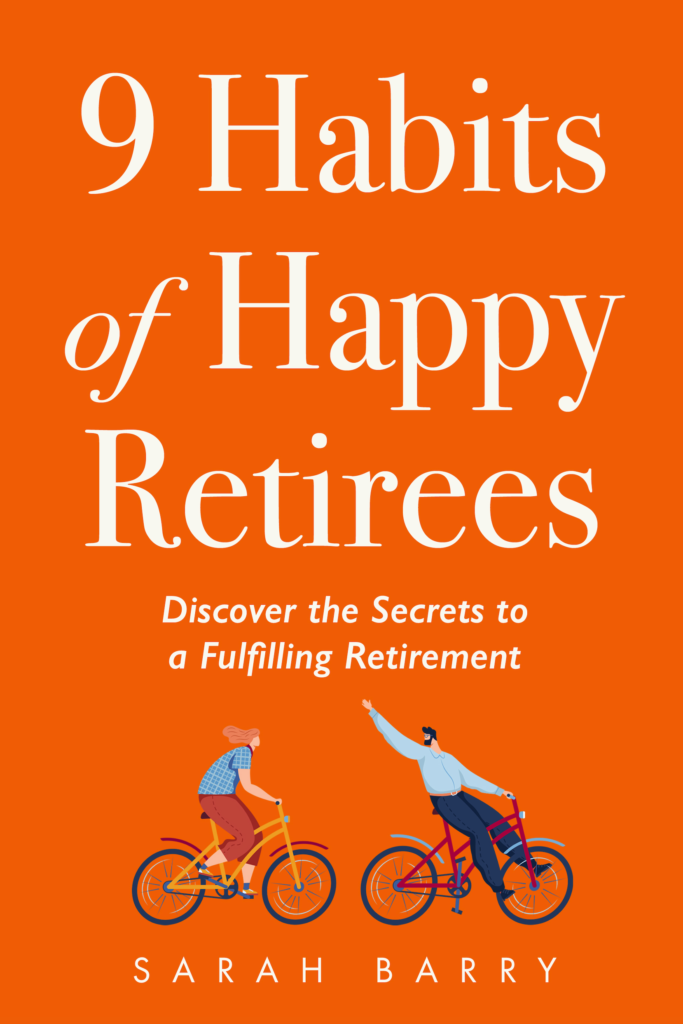
Retirement
Re-defined
9 Habits of Happy Retirees helps you shape a lifestyle that goes beyond financial security—focusing on the everyday habits that support meaning and balance.
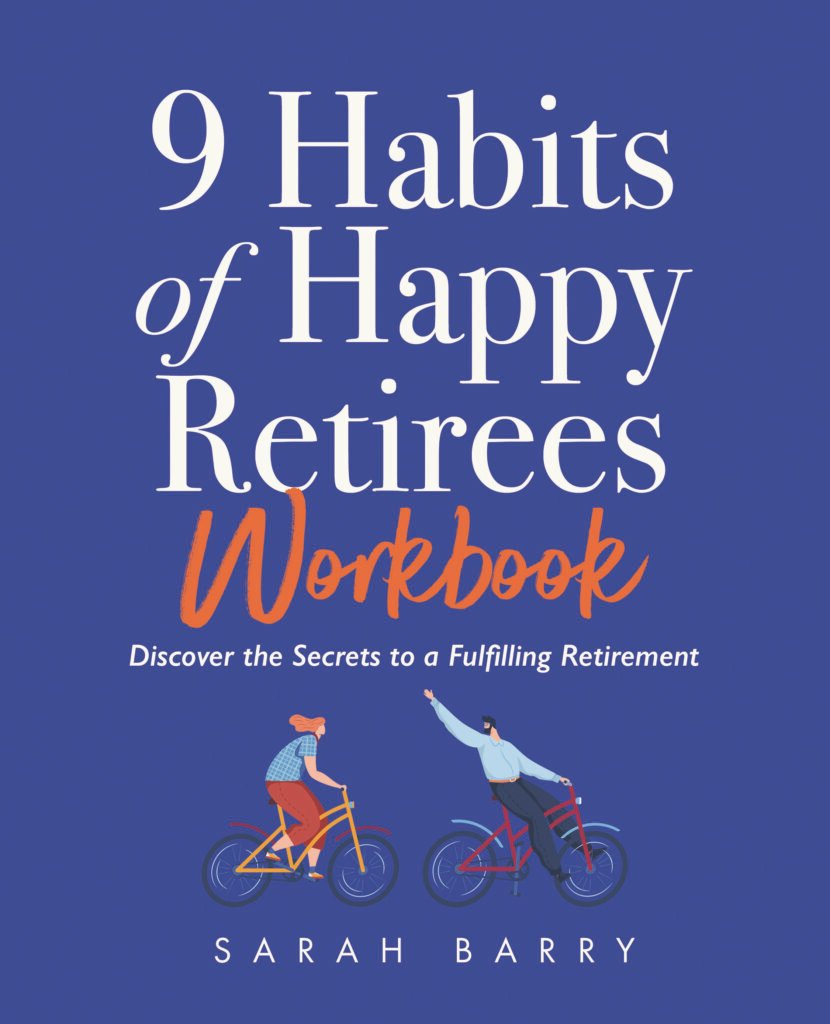
The Essential Workbook
Designed to complement the book, this workbook helps turn reflection into action—supporting your mental, emotional, and social wellbeing in retirement.
You don’t need a forever plan. You need thoughtful phases.
🌐 Visit www.sarahbarry.com or email hello@sarahbarry.com to explore coaching and resources for your next chapter.
